
Red Cat Acquires Apium Swarm Robotics: What Autonomous Swarming Means for U.S. Drone Defense
Red Cat Holdings (Nasdaq: RCAT) closed its acquisition of Apium Swarm Robotics on March 30, 2026, folding a California-based swarm autonomy developer into its growing defense drone portfolio. The deal is worth watching not because of its financial scale — terms weren't disclosed — but because it signals where the U.S. military drone market is heading: away from single-platform thinking and toward coordinated, autonomous multi-agent systems that can operate without continuous human input.
For defense contractors, public safety agencies building drone programs, and commercial operators eyeing government work, the implications are concrete.
Situation Report
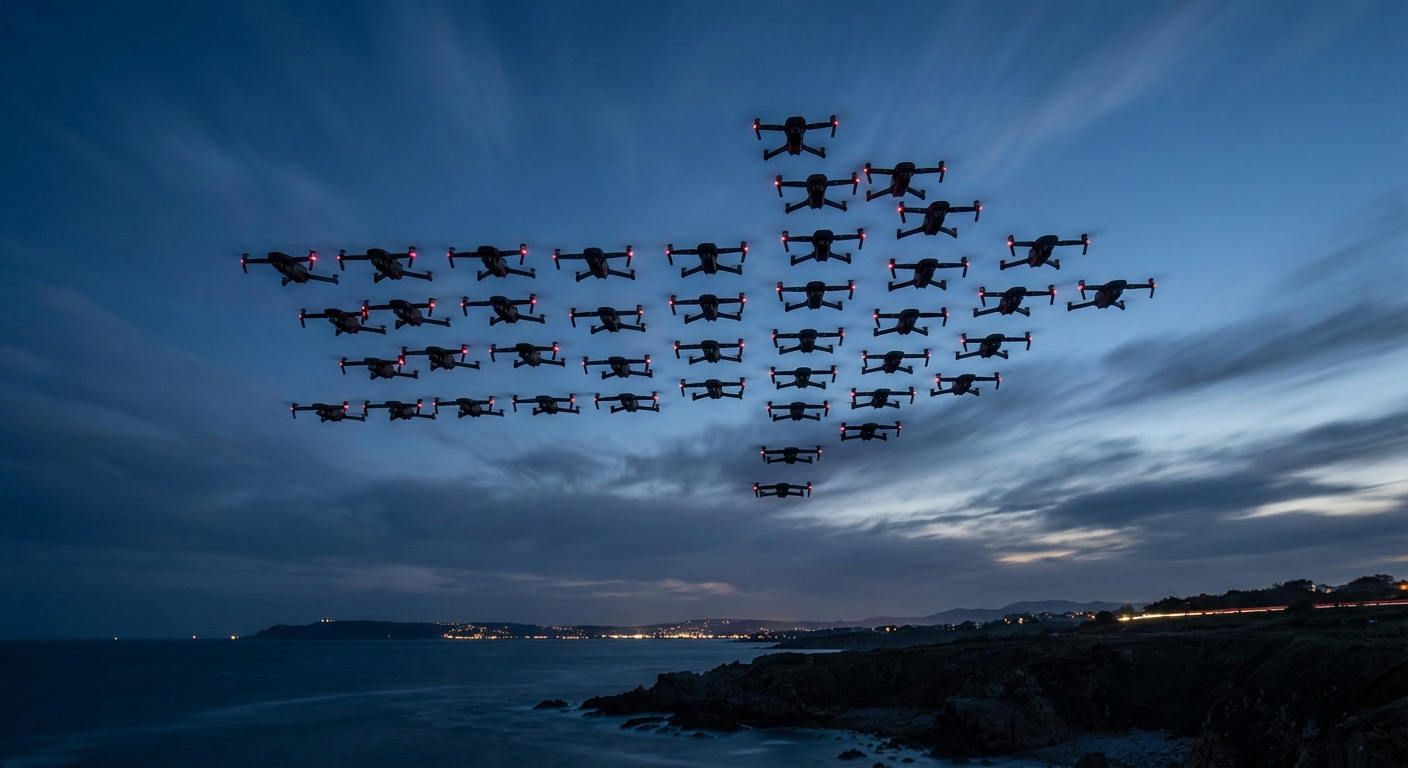
Red Cat Holdings announced March 30 that it has acquired Apium Swarm Robotics, a California-based developer of distributed control systems for autonomous swarming drones and uncrewed surface vessels (USVs). Apium will operate as an independent Red Cat company while integrating its multi-agent autonomy stack across Red Cat's Family of Systems.
Key Facts
- Acquirer: Red Cat Holdings, Inc. (Nasdaq: RCAT) — $1.54B market cap, U.S.-based defense drone provider
- Target: Apium Swarm Robotics, Inc. — California-based distributed autonomy developer
- Date closed: March 30, 2026
- Financial terms: Not disclosed
- Apium's tech: Distributed control systems enabling autonomous swarming for drones and USVs; autopilot-agnostic (PX4, ArduPilot compatible); GPS- and comms-denied capable
- Integration target: Red Cat's Black Widow ISR drone (fielded by U.S. Army under the Short Range Reconnaissance program)
- Prior relationship: Apium joined Red Cat's Futures Initiative in November 2025; demonstrated multi-agent missions at Army ACM-UAS Industry Day (2025) and Red Cat Innovation Day (February 2026)
- Market reaction: RCAT declined 8.6% on announcement day, troughing at -15.3%
This is Red Cat's third strategic acquisition in two years, following FlightWave Aerospace Systems in 2024. The pattern is clear: Red Cat is assembling a vertically integrated defense drone ecosystem by acquiring niche capability providers rather than building from scratch.
Operational Impact
Swarm autonomy is no longer a research curiosity. It's an operational requirement. The battlefield lessons from Ukraine, where hundreds of drones launch in coordinated nightly attacks, have rewritten procurement priorities across every NATO defense ministry. The DoD's Replicator initiative is explicitly designed to field autonomous systems at scale. Red Cat's Apium acquisition is a direct response to this shift.
What Apium Actually Does
Apium's distributed autonomy stack allows multiple robotic platforms — aerial, surface, or both — to dynamically coordinate without centralized command. Each agent in the swarm makes local decisions based on shared mission objectives, adapting to changes in real time. The system works in GPS-denied and communications-degraded environments, which is the entire point: if your swarm needs a reliable datalink to a ground station, it fails the moment a peer adversary jams that link.
The technology is autopilot-agnostic. It runs on PX4, ArduPilot, and other common flight controllers. That platform independence is strategically important — it means Apium's swarming layer can ride on top of existing hardware, not just Red Cat's.
Why This Matters for Defense Programs
Red Cat's primary customer is the U.S. Army. Its Black Widow drone is fielded under the Short Range Reconnaissance (SRR) program, one of the Army's most active small UAS initiatives. Embedding Apium's swarming autonomy into Black Widow means the Army could field coordinated ISR swarms from a single operator station — a capability gap that current SRR operations don't fill.
Red Cat's CEO Jeff Thompson framed it directly: "Near-peer adversaries are moving quickly to develop systems that can operate in coordinated, decentralized ways." He's right. China's military drone swarming demonstrations, including the recent Changying-8 heavy cargo drone maiden flight, reinforce that the U.S. is in a capability race where distributed autonomy is the differentiator.
Implications for Public Safety and Commercial Operators
Swarm autonomy technology developed for defense programs has a habit of migrating to commercial and public safety applications within 3-5 years. Agencies already operating DFR programs should watch this space. Coordinated multi-drone response — one drone provides overwatch while another delivers equipment, or multiple drones sweep a search area autonomously — is the logical next step for public safety aviation. The Skydio multi-drone approval earlier this month is an early indicator of where this heads.
For commercial operators pursuing government contracts, the signal is clear: the DoD values autonomy, multi-agent coordination, and GPS-denied operation. Programs that demonstrate these capabilities will win work. Programs that pitch single-platform VLOS operations will not.
Regulatory Analysis
Autonomous swarming sits in a regulatory gray zone that the FAA hasn't fully addressed. Here's the current landscape:
14 CFR Part 107 permits one pilot per drone. Multi-drone operations require either individual waivers under §107.39 or the emerging framework the FAA is developing. Skydio's recent approval to operate multiple drones under a single pilot is a waiver-based exception, not a rule. Scaling swarm operations commercially requires Part 107 reform or new rulemaking.
The proposed Part 108 BVLOS rule focuses on detect-and-avoid for single-aircraft operations. It does not directly address multi-agent autonomous coordination. This means swarm operations for commercial or public safety use will likely require separate rulemaking or expanded waiver authority beyond what Part 108 provides.
For defense operations, the regulatory picture is different. Military drone operations on restricted ranges and under military airspace authorities don't face the same Part 107 constraints. Red Cat can field swarming Widows under military authority long before the FAA sorts out commercial multi-drone rules. But the gap between military fielding and commercial availability creates a planning challenge for dual-use operators and agencies that work across both domains.
The FAA's enforcement posture in 2026 has tightened considerably, with fines reaching $100,000 for unauthorized operations. Any operator experimenting with multi-drone coordination outside of approved waivers faces substantial regulatory risk.
The Bottom Line
1. Swarm Autonomy Is Now a Procurement Baseline, Not a Science Project
Red Cat isn't acquiring Apium for R&D curiosity. It's embedding swarming into fielded systems for active military programs. Defense contractors and their subcontractors should treat multi-agent autonomy as a table-stakes capability for future proposals. If your platform can't coordinate with other platforms autonomously, your bids will lose to companies whose platforms can.
2. GPS-Denied Operation Separates Serious Programs from Demo Hardware
Apium's ability to operate in GPS- and comms-denied environments is the most operationally significant detail in this announcement. Every drone company claims autonomy; the ones that matter can sustain it when jamming starts. Public safety agencies evaluating DFR platforms should ask vendors directly: does your system degrade gracefully when GPS is denied? If the answer involves assumptions about signal availability, keep looking.
3. Commercial Operators Should Track Defense Autonomy for the Technology Pipeline
The autonomy capabilities Red Cat is building for the Army will eventually reach commercial applications — but not through the current regulatory framework. Operators interested in multi-drone commercial operations should begin engaging with the BVLOS waiver process now, building operational history and safety cases that position them for multi-agent approvals when the rules catch up to the technology. The FAA's recent ResilienX BVLOS waiver using shared surveillance infrastructure offers a template for how innovative operational concepts can earn approval under the current system.
Sources
Red Cat Holdings — Press Release: Red Cat Closes Acquisition of Apium Swarm Robotics GlobeNewsWire — Red Cat Closes Acquisition of Apium Swarm Robotics Red Cat Holdings — Apium Joins Red Cat Futures Initiative (November 2025)Need Expert Drone Consulting?
UAVHQ offers professional consulting for BVLOS waivers, Part 107/108 compliance, enterprise drone programs, and regulatory strategy. 25+ years of aviation expertise at your service.
Explore Our Services →