
By Wesley Alexander • July 29, 2026 • 8 min read
Tactical Summary
On July 28, 2026, DRONELIFE published Part 2 of its "The Human Edge" series, a comparison by aviation experts Aloha Ley and H. Giovanni Carnaroli of how the FAA, EASA, the UK Civil Aviation Authority, CASA, Japan's MLIT, and ICAO are handling human factors in drone operations. The finding is blunt. Aviation authorities have invested enormous effort in airspace integration, Remote ID, BVLOS frameworks, and vehicle certification, and comparatively little in the person operating the aircraft. Their line lands hard for anyone building a Part 108 program: removing the pilot from the aircraft does not remove the human risk, it relocates it.
That is the operator problem hiding underneath the BVLOS gold rush. Part 108 is written to let highly automated systems fly beyond visual line of sight without a per-flight waiver, and the industry read has been "approval equals launch." It does not. A BVLOS approval certifies your aircraft, your data links, and your operating rules. It does not certify that a single fatigued operator can supervise multiple aircraft across an extended shift and still make the right call when the automation hands the problem back. That gap is where the next wave of incidents will come from, and right now almost no regulator requires you to document how you manage it.
The regulatory patchwork, in operator terms
The DRONELIFE analysis maps a landscape that is, in the authors' word, nascent. Here is the operator read jurisdiction by jurisdiction.
The FAA keeps UAS human factors embedded inside Part 107's general airman fitness standards, the same "fit for flight" framework applied to crewed aviation, rather than in drone-specific cognitive or physiological requirements. FAA-sponsored research is moving, including the 2025 ASSURE UAS Center of Excellence annual report, which flagged areas needing continued attention such as operations near heliports where decision timing is most critical. The FAA Civil Aerospace Medical Institute is applying its cognitive-load and aeromedical methods to remote-pilot contexts, particularly fatigue thresholds in extended BVLOS operations. The key phrase for operators is "developing." There is no prescriptive federal fatigue rule for remote pilots today.
EASA is further along on paper. Its June 2026 revision of the Easy Access Rules for UAS incorporates the SORA 2.5 package, and its Operational Safety Objectives address "Remote Crew Training and Competency" and "Remote Crew Conditions." That builds a regulatory skeleton for human factors. The catch, as the authors note, is that SORA is a risk-assessment tool, not a prescriptive human-performance standard. What counts as adequate operator fitness is left to member states and individual operators to define.
The UK CAA took the most practitioner-oriented route, promoting the manned-aviation IMSAFE checklist as a standard reference for drone operators: Illness, Medication, Stress, Alcohol, Fatigue, and Eating/hydration. UK guidance states plainly that fatigue impairs cognition, reaction time, decision-making, and situational awareness, and that fatigued pilots should not operate. Blunt, but it is a usable starting point.
Australia's CASA and New Zealand's CAA point operators to manned-aviation fatigue guidelines for multi-day deployments, the kind of consecutive-day flying common in agricultural mapping and infrastructure inspection. Japan's MLIT is developing UAS-specific guidance as Level 4 operations over people expand. ICAO is working baseline guidance into Annex 1 personnel licensing and Annex 19 safety management, including Fatigue Risk Management Systems, but ICAO standards are non-binding and national implementation varies widely.
The pattern is consistent. Where human-factors requirements exist, they are guidance, risk-assessment inputs, or borrowed crewed-aviation frameworks. Almost nowhere are they prescriptive, enforceable, drone-specific standards. For a US operator, that means the responsibility to build a defensible fatigue and workload program falls on you, not on a rulebook you can point to.
What military UAS learned, expensively
The commercial industry is walking into a problem that military UAS operations solved the hard way over two decades. Early research on the MQ-1 Predator and MQ-9 Reaper, including work by Dr. Wayne Chappelle at the USAF School of Aerospace Medicine, established that effective UAS operators need a specific cognitive profile: rapid information processing, divided attention across simultaneous inputs, strong spatial perception, robust working memory, and pattern recognition under uncertainty. The "right stuff" for a drone operator was distinct from a manned pilot's, but no less demanding.
The more important lesson was the one that cost the most. The military found that human factors do not diminish with experience. High operator tempo, multiple missions per day, and extended shifts produced fatigue-related performance degradation that technical training alone could not fix. The response was to adapt Crew Resource Management, originally built for multi-crew airline cockpits, down to single-operator and small-team UAS environments.
That is the exact wall commercial BVLOS is about to hit. NASA's Aviation Safety Reporting System data cited in the analysis indicates 58 percent of UAS reporters operate as single-person crews. CRM was designed around a second person catching your errors. When you are a crew of one supervising automated flights, there is no co-pilot to challenge a bad decision, no one to notice you have been staring at the same screen for six hours. The automation was supposed to reduce workload. In practice it changes the workload into long stretches of low-stimulation monitoring punctuated by sudden high-stakes intervention, which is close to a textbook recipe for vigilance decrement.
Where this bites a Part 108 program
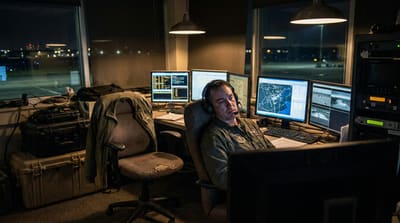
Consider the operational shape of a maturing BVLOS operation. One remote pilot, or one operations supervisor, oversees multiple aircraft on repetitive routes. The C2 link is solid until it is not. Remote ID is broadcasting, the route is planned, the NOTAM check was clean at shift start. Eight hours in, an aircraft throws a degraded-GPS warning at the same moment a second aircraft hits an unexpected temporary flight restriction that popped up mid-shift. The automation escalates both to the human. That human is now doing exactly the divided-attention, high-consequence task the military identified as most vulnerable to fatigue, at the worst possible point in a shift, with no second crew member.
Nothing in the current US framework requires you to have planned for that moment. No rule caps your operators' shift length for BVLOS supervision. No rule requires a documented Fatigue Risk Management System for a Part 108 operation the way one exists for Part 121 airlines. If an incident happens and an investigator asks how you manage operator workload and fatigue, "we follow Part 107 airman fitness standards" is a thin answer. The absence of a prescriptive rule is not the same as the absence of liability. It means the standard of care is whatever a reasonable professional operator should have done, and that is precisely the ground where a well-run program with documentation wins and an unprepared one loses.
The operator checklist
Treat the human-factors gap as a program you build now, not a rule you wait for.
- Adopt IMSAFE as a pre-shift gate, in writing. The UK CAA already treats it as a standard. Make it a logged pre-flight self-assessment for every remote pilot and operations supervisor, not an informal habit. It costs nothing and it establishes that you took operator fitness seriously.
- Write a Fatigue Risk Management System scaled to your operation. Borrow the crewed-aviation and ICAO Annex 19 structure. Set maximum continuous supervision windows, mandatory breaks, and shift-length caps for BVLOS monitoring. Define who can extend a shift and under what documented conditions.
- Build CRM-for-one procedures. Since a single operator has no co-pilot, engineer the second check into the system: structured challenge-and-response callouts, automation-alert acknowledgment logging, and a defined escalation path to a supervisor when two contingencies stack. Do not assume the automation is your co-pilot. It is the thing that hands you the emergency.
- Instrument the console handoff. The dangerous moment is when automation returns control to the human. Log those events, review them, and train specifically for concurrent contingencies. This is the same discipline we push in why a BVLOS approval is not the same as launch readiness: the approval is the start of the safety case, not the end.
- Tie fatigue data to your C2 and route planning. Fatigue interacts with everything else. A tired operator managing a marginal C2 link on a complex route is a compounded risk, the same lost-link exposure we covered in how a lost C2 link can ground your BVLOS waiver. Route conservatism and link redundancy buy back some of the human margin you lose late in a shift.
The UAVHQ Read
The easy misread of the "The Human Edge" analysis is that it is an academic safety essay. The accurate read is that it is a map of where the regulators are not, and in commercial aviation the places the rules have not reached yet are exactly where the liability and the next incidents concentrate. The industry has spent five years proving the aircraft can fly itself beyond line of sight. It has spent almost no regulatory effort proving the human supervising it can sustain the attention that job actually demands.
For operators, the move is to get ahead of the rule instead of inheriting it. The FAA is in "developing," EASA and ICAO have frameworks without teeth, and the UK has a checklist. That is a window. An operator who can show an investigator, an insurer, or a prospective enterprise client a documented fatigue and CRM program has a genuine competitive and safety advantage over one who is waiting for a mandate. The mandate will come. The operators who wrote their own file first will be the ones who set the reference the rest of the industry gets measured against.
If you are standing up a Part 108 or BVLOS program and need to build a defensible human-factors file, a scaled Fatigue Risk Management System, or CRM-for-one procedures that hold up under scrutiny, that is the kind of operational and regulatory work UAVHQ does with operators. The gap is open now. Build the file before an incident writes it for you.
Sources
- DRONELIFE: How the World Is Addressing Human Factors in Drone Operations (Part 2, July 28, 2026)
- DRONELIFE: Human Factors in Drone Operations, Cognitive Load and Flight Safety (Part 1, July 22, 2026)
- FAA ASSURE UAS Center of Excellence Annual Reports
- EASA: Easy Access Rules for Unmanned Aircraft Systems
- ICAO: Safety Management (Annex 19) and Fatigue Risk Management Systems
BVLOS Part 108 Human Factors Remote Pilot Fatigue Crew Resource Management CRM Fatigue Risk Management System IMSAFE FAA EASA SORA ICAO Annex 19 CAMI ASSURE Commercial Drone Operator Compliance Workload Situational Awareness C2 Link