
By Wesley Alexander • September 7, 2026 • 7 min read
Tactical Summary
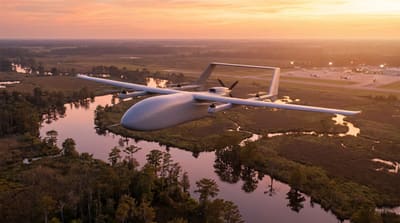
In late August, Elroy Air's Chaparral flew a week of flights with no pilot on board out of Houma-Terrebonne Airport in Louisiana, carrying real cargo under air traffic control at one of the busiest rotorcraft airports in the country. The FAA announced it as the first remotely piloted test flight under the eVTOL Integration Pilot Program (eIPP).[1][2]
Two things about this event matter more than the video clips. First, the words the FAA chose and the words Elroy chose are not the same words, and the gap between them is the actual story. Second, this was a data-gathering demonstration under a pilot program, not the start of a certified service. For operators building toward uncrewed cargo, the useful move is not celebration. It is understanding precisely what was authorized, what was not, and what evidence the FAA is now collecting that will shape the rules you will eventually fly under.
What Actually Happened at Houma
The facts, cross-referenced across the FAA's announcement and trade reporting:
- Elroy Air, the Louisiana Department of Transportation and Development, and helicopter operator Bristow Group flew the hybrid-electric Chaparral over roughly a week in late August at Houma-Terrebonne Airport, under the state's LIFTOFF Louisiana initiative.[1][2][3]
- The aircraft flew with no pilot on board, handled by air traffic control alongside normal traffic at an airport that serves heavy Gulf of Mexico helicopter operations.[2][3]
- Cargo was real: packages, medical supplies, toolboxes with spare parts, food, and water containers.[3]
- Chaparral is a hybrid-electric VTOL design that Elroy says carries more than 500 pounds of cargo with a range of up to 450 miles, needing no runway and no charging infrastructure.[2][3]
- FAA Administrator Bryan Bedford put his name on it: "This demonstration with the Louisiana Department of Transportation and Development provides data to help turn these concepts from trial to deployment."[1]
The eIPP itself was created under the June 2025 executive order on drone integration. In March 2026 the Department of Transportation selected eight projects across 26 states from more than 30 proposals; Louisiana's is one of them, and Elroy says Chaparral is the only purpose-built heavy-payload cargo drone in the program.[1][4]
"Remotely Piloted" vs. "Autonomous": The Gap Is the Story
Read the two announcements side by side. The FAA's headline says "remotely piloted."[1] Elroy's CEO describes "uncrewed, autonomous flights."[1][3] Both descriptions can be true at once: an aircraft can fly its mission autonomously while a remote crew retains supervisory authority and intervention capability. But the choice of language tells you what each party is claiming, and what the regulator is prepared to put its name to.
The FAA is not yet describing an aircraft that operates without human accountability in the loop. That is consistent with how every serious uncrewed program actually works today: automation flies, humans supervise, and the certification question is how much supervisory capacity is required, by whom, with what command-and-control link performance, and with what documented failure states.
If you have run large uncrewed aircraft operationally, this is familiar territory. The aircraft was never the hard part. The hard part is the surrounding system: C2 link management and lost-link behavior, contingency routing, ATC coordination procedures, ground crew discipline, and the evidence trail that proves all of it works when something degrades. Houma was a test of exactly that surrounding system, at a real airport, in real traffic. That is why it matters more than another closed-range demo.
Why Cargo Is Beating Passengers to the Punch
The eIPP is nominally an eVTOL program, and most public attention has gone to air taxis. But the first uncrewed flights under the program carried toolboxes, not passengers. That is not an accident, and operators should internalize why.
Certification burden scales with the consequence of failure. A cargo aircraft with no one on board can accept a level of risk, and a pace of iteration, that a passenger-carrying design cannot. Every flight hour Chaparral logs generates data without exposing a single occupant. Meanwhile, the mission set Elroy is targeting (offshore energy resupply, industrial logistics, disaster response) tolerates route structures over water and low-density terrain where the ground-risk case is far easier to close.[1][2]
The lesson for the industry is the one this site keeps returning to: the constraint on advanced operations is not technology, it is certification and airspace integration. The companies making real progress are the ones that picked missions where the safety case closes soonest. The FAA's BEYOND Phase 2 solicitation follows the same logic on the small-UAS side: the agency wants operational data from missions it can defend.
What Was Not Authorized
Keep the boundaries of this event clear, because the hype cycle will not.
This was a demonstration under a pilot program, not scheduled service. Commercial cargo runs would require separate FAA approvals that do not yet exist for this category.[4] No certification path for the Chaparral class has been publicly laid out, and no timeline for moving from trial to routine operations has been announced. The eIPP is explicitly a data-gathering exercise; the FAA says it will use the results to identify gaps, improve procedures, and support integration into the National Airspace System, with more test flights planned through the rest of the year.[1]
There is also a scale claim worth flagging with attribution rather than repeating as fact: Elroy says over 1,400 aircraft are on order and that the first production aircraft, to be built by Kratos Defense under an exclusive U.S. manufacturing arrangement, is due before the end of 2026.[3][4] Order books in this industry have historically been soft. Treat production and delivery numbers as company statements until airframes are actually flying revenue missions.
The Operator Move
If you run or are building a cargo, delivery, or heavy-UAS program, here is what to do with this signal:
1. Track the eIPP data pipeline, not the press releases. The operational data from Houma and the other seven eIPP projects feeds directly into future FAA policy. The procedures being validated now (ATC integration for uncrewed aircraft at working airports, lost-link handling in mixed traffic) will become the template your future authorization is measured against.
2. Separate authorization from readiness. A pilot-program flight approval is not a certificated operation, and even a future certificate will not create operational maturity. The same principle applies down-market: as we covered in the TSA BVLOS security roundtables brief, regulators increasingly want evidence of working controls, not aspirational manuals.
3. Watch the terminology in every approval. "Remotely piloted," "uncrewed," and "autonomous" are not marketing synonyms; they define crew requirements, C2 performance standards, and where liability sits. When your own authorizations arrive, the words in them will constrain your operation more than the aircraft's capabilities will.
4. If your roadmap includes BVLOS at any scale, build the evidence stack now. Heavy cargo VTOL sits in a different certification bin than sub-55-pound operations under the proposed Part 108 framework, but the readiness architecture is the same: documented C2 management, contingency procedures, training records, and an audit trail that survives scrutiny. The Part 108 BVLOS Readiness Playbook is built for exactly that preparation problem, and the discipline transfers directly to larger platforms.
The Bottom Line
A 500-pound-payload aircraft flew for a week from a busy Gulf Coast airport with nobody on board, under ATC, and the FAA Administrator endorsed it by name. That is a genuine milestone for uncrewed cargo in the National Airspace System. It is also, deliberately, a data-collection exercise whose main product is the regulatory groundwork for what comes next. The operators who benefit will be the ones reading the fine print while everyone else shares the video.
Wesley Alexander is a former Insitu/Boeing ScanEagle Commercial Chief Test Pilot and former UAS DPE for Insitu ScanEagle pilots and instructors. UAVHQ provides operator-focused intelligence on regulatory and safety developments in the commercial UAV industry.
Sources
[1] https://www.faa.gov/newsroom/faa-announces-key-demonstrations-first-remotely-piloted-hybrid-electric-flight-cargo — FAA Press Release, August 31, 2026 [2] https://www.ainonline.com/aviation-news/futureflight/2026-09-02/elroy-air-bristow-fly-autonomous-freighter-louisiana — Aviation International News, September 2026 [3] https://cargoforwarder.eu/2026/09/06/elroy-air-successfully-pilots-first-uncrewed-eipp-flights/ — CargoForwarder Global, September 6, 2026 [4] https://aerocorner.com/news/faa-elroy-air-cargo-drone-louisiana/ — AeroCorner, September 1, 2026