
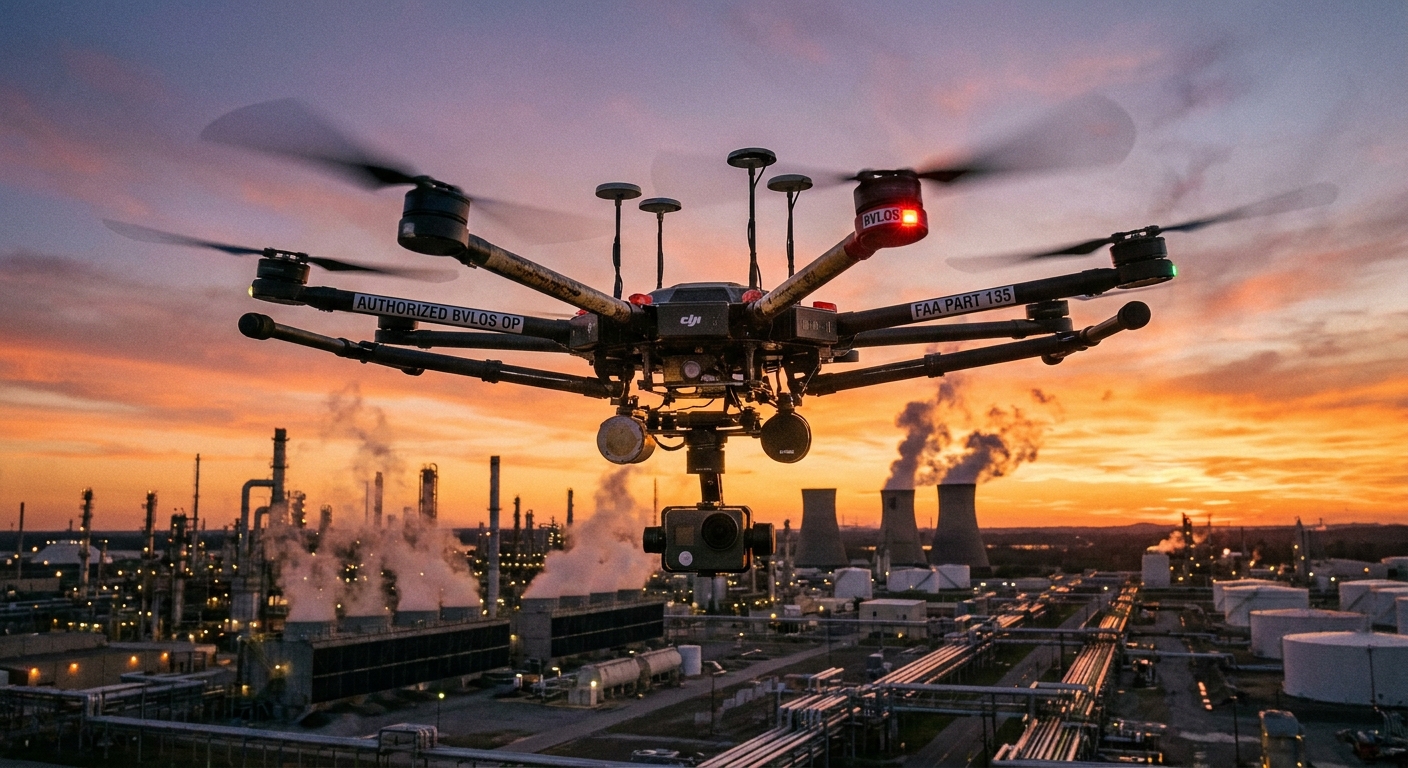
The regulatory dam has finally broken. After years of incremental waivers, exhaustive Aviation Rulemaking Committee (ARC) sessions, and what felt like endless Notice of Proposed Rulemaking (NPRM) iterations, the FAA has codified the Part 108 framework. For commercial operators, the era of relying on brittle, site-specific Part 107 waivers is closing. We are officially entering the foundation of routine, scalable Beyond Visual Line of Sight (BVLOS) operations in the National Airspace System (NAS).
What Part 108 Actually Means
As a Chief Test Pilot who has spent hundreds of hours in the seat validating these very ConOps, I can tell you this represents a structural tectonic shift. Part 108 doesn't just grant permission to fly further; it establishes a repeatable, certification-driven pathway. It decouples the operation from the necessity of visual observers (VOs) daisy-chained across the landscape, shifting the burden of safety from human eyesight to determinable, quantifiable system performance.
The Detect-and-Avoid (DAA) Mandate
The cornerstone—and the heaviest lift—of Part 108 is the mandated integration of active Detect-and-Avoid (DAA) technologies. Whether you are relying on an onboard sensor suite (radar, optical, acoustic) or leveraging a ground-based radar network (GBSS), the FAA's stance is unequivocal: the responsibility of remaining well clear of non-cooperative aircraft is absolute.
Operators looking to capitalize on Part 108 must integrate robust DAA systems that meet stringent Minimum Operational Performance Standards (MOPS). If your C2 link latency exceeds the DAA system's collision avoidance threshold, you don't have a BVLOS platform—you have a liability. The engineering focus must now heavily index on sensor fusion and deterministic software response.
Industry Implications
The economic impact of this ruling cannot be overstated. With BVLOS unlocked, use cases like linear infrastructure inspections, vast agricultural surveys, and medium-haul medical logistics shift from experimental trials to standard operating procedures. We expect major utility companies and logistics integrators to dramatically accelerate their adoption timelines.
Check out our previous coverage on Building a Commercial Drone Program to see how enterprise teams are already architecting their operations around these new regulatory allowances.
The Operator Perspective
From the flight deck, Part 108 fundamentally elevates the role of the Remote Pilot in Command (RPIC). We are transitioning from direct, stick-and-rudder manual control to sophisticated airspace management and systems monitoring. This demands a significantly deeper comprehension of air traffic integration, system redundancy, and failure state management.
The old days of "fly it 'til you see it" are dead. The new paradigm relies on sophisticated command and control (C2) link management, conformance monitoring, and absolute trust in your telemetry. If you lose your primary link, your aircraft's autonomous return-to-base or ditch logic better be flawless and documented.
For a detailed breakdown of fleet readiness, review our BVLOS Compliance Checklist.
Looking Ahead
Make no mistake: Part 108 is not a free pass. It requires rigorous safety casing, documented hardware reliability, and an organizational culture that prioritizes airworthiness. This process will still heavily challenge smaller operators lacking the capital for type-certified hardware or complex DAA integrations. However, for those willing to invest in the right systems, protocols, and pilot training, the U.S. airspace just got significantly larger.