
_EI-EXR_(DSC07491).jpg)
By Wesley Alexander • August 5, 2026 • 7 min read
Tactical Summary
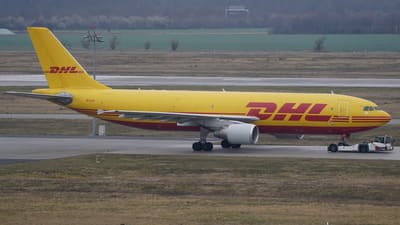
Leipzig/Halle Airport temporarily closed both runways overnight after an unidentified flying object was sighted and a drone with an explosive device was found near the south runway, according to Associated Press reporting carried by Newsday. Police and prosecutors said the detonator was removed. Reuters reported that a DHL cargo aircraft hit an unknown object while climbing away from Leipzig/Halle and made an unscheduled landing in Hanover, where minor nose damage was found.
That combination is what makes the story operationally important. This is not just another drone sighting near an airport. It is a reported explosive device near a major cargo hub, Ukrainian Antonov aircraft, and a separate collision report involving a freight aircraft in the same disrupted operating environment.
The caveat matters: authorities have not publicly tied the found drone to the aircraft damage, identified who was responsible, or confirmed a state actor. German officials also said there was no determined connection at this stage to earlier cargo-sabotage incidents. But for commercial operators, airport managers, and public-safety teams, the useful takeaway does not require speculation. Critical logistics airports now sit squarely inside the UAS security problem.
Cargo Airports Are Different Targets
Passenger airports get most of the public attention because passengers feel the disruption immediately. Cargo airports carry a different kind of risk. They concentrate high-value aircraft, logistics networks, military transport, customs activity, hazardous shipments, and time-critical supply chains in the same place.
Leipzig/Halle is a major DHL hub. Reuters also noted that Ukraine's Antonov Airlines uses the airport as an operating base. Associated Press reporting said photos from the scene showed police technicians and an explosives-disposal robot near a Ukrainian aircraft. AeroTime reported that Antonov An-124 freighters have operated from Leipzig/Halle since Russia's full-scale invasion disrupted the carrier's home base.
That is exactly the sort of location where a small UAS can become more than an airspace nuisance. A drone does not need to be large to force a runway closure, divert arrivals, trigger explosive-ordnance response, and create enough uncertainty for cargo operators to change plans. If it carries a device, even a defective one, the problem moves from aviation nuisance to infrastructure security.
Do Not Overclaim the Collision
The public facts are still messy, and UAVHQ is not going to clean them up by inventing certainty. Reuters described the DHL aircraft as hitting an unknown object after departing Leipzig/Halle and then landing in Hanover. AP, via Newsday, described an apparent second flying object colliding with a freight aircraft after it aborted a landing because the runway was closed. AeroTime cited reporting that the aircraft sustained minor nose damage, but authorities had not publicly identified the aircraft.
So the correct language is:
- Drone with explosive device found near airport runway.
- Separate or apparent second object collided with a freight aircraft, according to police/prosecutors and Reuters reporting.
- Minor damage reported after landing in Hanover.
- Responsibility and connection between events not established publicly.
That caution is not lawyerly dithering. It is aviation discipline. If your safety process depends on assumptions you cannot prove, it is not a safety process.
The Operator Lesson: Security Is Now Part of Airspace Integration
Most commercial drone operators still think of airport conflict as a Part 107 or LAANC problem: stay out of controlled airspace unless authorized, respect altitude ceilings, and avoid crewed traffic. That is necessary, but it is no longer sufficient around strategic logistics hubs.
The Leipzig/Halle incident points at a wider operating picture:
- Detection has to distinguish nuisance from threat. A hobby drone, a lost aircraft, a surveillance platform, and a device-carrying UAS do not require the same response. The detection stack has to preserve enough evidence for police and airport operations to classify the event quickly.
- Closure decisions need rehearsed thresholds. If a flying object is sighted and another object is found near a runway, airport operators need clear go/no-go triggers before the first diverted arrival is already in the stack.
- Cargo operators need UAS incident playbooks. A freight carrier should not be inventing its diversion, damage-inspection, and customer-disruption process during the event.
- Public-safety agencies need evidence discipline. Chain of custody, Remote ID captures, radar tracks, visual reports, and recovered hardware can decide whether the incident becomes an enforcement case or just another alarming headline.
The drone industry tends to talk about integration as access: how drones get permission to fly more places. Events like this show the other side. Integration also means proving that critical sites can detect, identify, respond to, and document unauthorized UAS activity without turning every sighting into chaos.
Why This Matters in the U.S.
The U.S. operator does not need to copy Germany's facts onto an American airport to see the warning. The pattern maps cleanly to U.S. cargo hubs, public-safety staging areas, energy terminals, ports, and defense-adjacent logistics sites.
A drone incident at a cargo airport creates at least four simultaneous questions:
- Is this an aviation hazard, a criminal security event, or both?
- Who has authority to detect, track, seize, or neutralize the aircraft?
- What evidence is preserved for FAA, law-enforcement, airport, insurance, and customer-impact records?
- How quickly can normal operations resume without pretending the risk was solved?
That is why counter-UAS policy, Remote ID, airport detection networks, and site-protection rules keep converging. The operational problem is no longer hypothetical. A small device near the wrong runway can touch air carrier operations, cargo continuity, national-security logistics, and airport public confidence in one night.
The UAVHQ Read
The Leipzig/Halle story is still developing, and the public record should be treated carefully. Do not jump from "explosive device found" to attribution. Do not assume the drone near the runway is the object the aircraft hit unless investigators say so. Do not turn minor aircraft damage into a dramatic crash narrative.
But do take the core lesson seriously. Cargo airports are UAS security environments now. Any operator working near critical infrastructure should expect more detection, more documentation, more law-enforcement interest, and more pressure for clear authority around unauthorized drones.
For legitimate commercial UAS teams, this is another reason to run clean: Remote ID working, authorization records current, geofence/airspace checks documented, crew roles briefed, and emergency-aircraft triggers explicit. The industry earns expanded access by showing it can separate authorized operations from hostile or reckless aircraft quickly and credibly.
If your operation touches airports, logistics hubs, utilities, ports, public safety, or defense-adjacent sites, the question is no longer whether drones are part of the security plan. They are. The only choice is whether the plan exists before the next object appears near a runway.
Sources
- Reuters via WTVB: German DHL cargo plane hits object as drone found at Leipzig airport
- Associated Press via Newsday: Drone with an explosive device found at a German airport and detonator removed
- BBC report carried by Public Radio of Armenia: Drone carrying explosives found at German airport, police say
- AeroTime: Suspected explosive device and mid-air collision disrupt Leipzig airport
Leipzig Halle Airport Drone Explosive Device DHL Cargo Aircraft Mid Air Collision Counter UAS Airport Security Cargo Hub Drone Detection Remote ID Critical Infrastructure UAS Security Commercial Drone Operator Compliance