
UAVHQ Staff | March 6th, 2026
In a move that signals the drone industry's rapid maturation, Canada-based Versaterm has acquired Aloft Technologies, creating what may be the first truly integrated platform for public safety drone operations. The acquisition, following Versaterm's July 2025 purchase of DroneSense, removes the final regulatory friction point that has long plagued emergency drone deployments.
The Missing Piece Falls into Place
When Versaterm acquired DroneSense eight months ago, the message was clear: drones were evolving from experimental tools to core emergency response assets. But one significant operational hurdle remained — FAA airspace authorization. With the Aloft acquisition, that bottleneck is now eliminated.
Aloft isn't just another drone software company. As an FAA-approved Unmanned Service Supplier (USS), it processes the vast majority of LAANC (Low Altitude Authorization and Notification Capability) approvals across the United States. These are the near-instant digital authorizations that allow drones to legally operate in controlled airspace, including areas near airports and dense urban environments where emergency responses are most critical.
"This acquisition removes the 'blockers' agencies face every day," explains Versaterm CEO Steve Seoane. "We're moving toward a future where deploying a drone is as routine as dispatching any patrol or fire unit."
What This Means for Emergency Responders
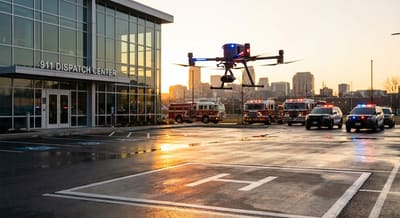
The practical implications are significant. Emergency dispatch centers can now manage the entire drone deployment lifecycle within a single system:
- Call Intake: 911 calls trigger automatic assessment for drone deployment
- Flight Planning: Integrated airspace intelligence identifies optimal flight paths
- FAA Authorization: Automatic LAANC clearance for controlled airspace
- Mission Execution: Real-time video feeds integrated into existing command systems
- Fleet Management: Complete lifecycle tracking of drone assets and crews
For Drone as First Responder (DFR) programs, this integration is particularly crucial. Programs like Warren, Michigan's unified police and fire drone initiative deploy drones to emergency scenes ahead of ground units, providing critical situational awareness that can save lives and improve resource allocation. However, regulatory compliance has been a persistent challenge, especially in urban environments with complex airspace restrictions.
Industry Consolidation Accelerates
The Versaterm strategy reflects broader consolidation trends in the commercial drone sector. As the industry matures beyond the initial "hardware-first" phase — exemplified by hardware advances like the BRINC Guardian's Starlink-connected platform — software integration and regulatory compliance are becoming the key differentiators.
"We were built to power the 'airspace layer' of modern drone operations," says Jon Hegranes, Aloft's founder and CEO. "Now that layer sits directly inside the public safety platform agencies use for dispatch, reporting, and command oversight."
This vertical integration approach echoes patterns seen in other enterprise technology sectors, where companies that can offer complete solutions tend to outperform point-solution providers. For public safety agencies already dealing with budget constraints and complex procurement processes, a single vendor relationship for the entire drone workflow offers significant administrative advantages.
Regulatory Environment Driving Change
The timing of these acquisitions aligns with several regulatory developments that are expanding drone operational capabilities. The FAA's ongoing work on Part 108 regulations for Beyond Visual Line of Sight (BVLOS) operations and continued refinement of the UTM (UAS Traffic Management) framework are creating new opportunities for commercial drone applications.
However, these expanded capabilities come with increased compliance requirements — starting with the foundational FAA Part 107 certification that all commercial drone pilots must hold. Agencies need platforms that can adapt to evolving regulations while maintaining operational continuity. Versaterm's integrated approach positions it well to handle these regulatory complexities on behalf of its customers.
What This Means for Drone Operators
For commercial drone operators and public safety professionals, the Versaterm ecosystem offers several immediate benefits:
Reduced Operational Friction
The integration eliminates the need for operators to manually coordinate between dispatch systems, fleet management platforms, and airspace authorization tools. This reduction in administrative overhead allows crews to focus on mission execution rather than paperwork.
Improved Compliance Tracking
With automated logging of flight authorizations, airspace restrictions, and mission parameters, agencies can maintain comprehensive compliance records without additional administrative burden. This is particularly valuable for programs facing regulatory audits or insurance requirements.
Scalability for Growing Programs
As agencies expand their drone capabilities, the unified platform can accommodate larger fleets, more complex missions, and additional operational areas without requiring integration of new software systems.
Competitive Landscape Impact
Versaterm's aggressive acquisition strategy puts pressure on competitors in both the public safety software and drone management spaces. Traditional CAD vendors will need to evaluate their own drone integration capabilities, while drone-specific software companies may find themselves at a disadvantage without broader public safety platform access.
The move also highlights the strategic value of airspace intelligence providers. Companies like AirMap, Skyward (now part of Verizon), and others in the UTM space may see increased acquisition interest as larger players seek to replicate Versaterm's integrated approach.
Looking Ahead: The Standardization of Drone Response
Perhaps the most significant long-term implication is the potential normalization of drone operations in emergency response. By treating drone deployment as just another dispatch function, Versaterm is betting that public safety agencies will increasingly view UAVs as standard equipment rather than specialized tools.
This shift could accelerate adoption timelines across the industry. Agencies that might have been hesitant to invest in drone programs due to operational complexity may find the integrated platform approach more appealing. Similarly, departments already operating drones could expand their programs more rapidly with reduced administrative overhead.
Industry Implications
The Versaterm-Aloft combination represents a significant milestone in the commercialization of public safety drone operations. Key industry impacts include:
- Procurement Simplification: Single-vendor solutions reduce procurement complexity for budget-constrained agencies
- Training Standardization: Unified platforms enable more consistent training programs across departments
- Data Integration: Consolidated mission data improves after-action analysis and operational optimization
- Insurance Benefits: Comprehensive compliance tracking may reduce liability concerns and insurance costs
Challenges and Considerations
While the integration offers significant benefits, it also raises important considerations for the industry:
Vendor Lock-in Risks
Agencies adopting the full Versaterm ecosystem may find it difficult to switch providers in the future, particularly as more operational data becomes integrated into the platform.
Regulatory Dependencies
The platform's value proposition depends heavily on current FAA regulations and approval processes. Significant regulatory changes could impact the system's effectiveness.
Technology Evolution
As drone technology continues advancing rapidly, integrated platforms must evolve quickly to support new capabilities without disrupting existing operations.
The Road Forward
Versaterm's acquisition strategy suggests the company is positioning itself for a future where drone operations are fully integrated into standard emergency response protocols. If successful, this approach could serve as a template for other public safety technology providers.
For the drone industry broadly, the Versaterm model demonstrates the value of solving operational challenges rather than just developing new hardware. As the market matures, software integration and regulatory compliance may become more important differentiators than flight performance or sensor capabilities. Agencies navigating this complex landscape can benefit from professional drone consulting services to align their technology investments with regulatory requirements.
The acquisition also validates the long-term viability of public safety drone operations as a significant market segment. With proper integration and regulatory support, emergency response agencies appear ready to adopt drone technology at scale.
Conclusion
Versaterm's acquisition of Aloft represents more than just another industry consolidation. It signals the drone industry's evolution from hardware-focused experimentation to software-enabled operational integration. By removing regulatory friction and streamlining workflows, the combined platform makes drone deployment as routine as any other emergency response asset.
For drone operators, this development reduces operational complexity and compliance burden. For the broader industry, it demonstrates a viable path toward mainstream adoption of commercial drone operations. And for emergency responders, it offers the promise of enhanced situational awareness without additional administrative overhead.
As other players in the public safety and drone management spaces respond to this competitive move, we can expect to see additional consolidation and integration efforts. The race is on to create the most comprehensive, user-friendly platform for emergency drone operations – and Versaterm has taken a significant early lead.
Sources:
- DroneDJ: Versaterm doubles down on drones with Aloft acquisition
- Versaterm Corporate Website
- Federal Aviation Administration LAANC Program Documentation
📺 Watch the Video Briefing
Get expert video analysis on this topic and more on the UAVHQ YouTube channel.
🚁 Stay Ahead of the Drone Industry
Expert analysis on FAA regulations, commercial operations, and emerging technology — delivered to your inbox.
Subscribe
Need Expert Drone Consulting?
UAVHQ offers professional consulting for BVLOS waivers, Part 107/108 compliance, enterprise drone programs, and regulatory strategy. 25+ years of aviation expertise at your service.
Sponsored by
Your Brand Here
Reach drone professionals, commercial operators, and aviation decision-makers.
📺 Watch the Video Briefing
Get expert video analysis on this topic and more on the UAVHQ YouTube channel.
🚁 Stay Ahead of the Drone Industry
Expert analysis on FAA regulations, commercial operations, and emerging technology — delivered to your inbox.
Subscribe
Sponsored by
Your Brand Here
Reach drone professionals, commercial operators, and aviation decision-makers.
UAVHQ
Drone industry intelligence and professional UAV consulting from Wesley Alexander — Senior Test Pilot with 25+ years of aviation leadership.
Explore
Connect
© 2026 UAVHQ. All rights reserved. · Privacy Policy