
Tactical Summary
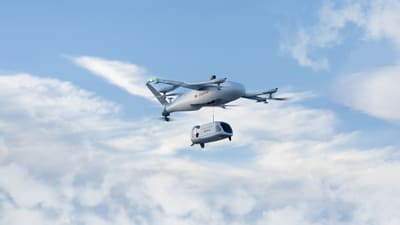
On the morning of September 4, 2026, a Zipline delivery drone came down in the southbound lanes of Highway 6 near Timber Creek Place Lane, in the Cypress area of northwest Harris County.[1] Zipline says the aircraft was on its way to pick up an order when it encountered a "midflight issue" and deployed its parachute, and the company reports no injuries and no property damage.[1] As of September 8, no public cause has been established in the sources reviewed.[1][4] The deployment deserves attention, but as a starting point, not a verdict. A parachute is mitigation. Prevention, exposure, failure data, and recovery practice are still open questions.
What We Know, and Who Says So
KPRC 2's original reporting, published the afternoon of September 4, describes a photo showing the all-electric aircraft in the middle of the southbound lanes, parachute deployed.[1] The report that no one was hurt and no property was damaged comes from the company and should stay attributed that way.[1] Zipline said the aircraft was headed to pick up an order; nothing on the record says it was carrying food.[1]
Follow-on coverage adds less than it appears to. A September 7 trade story traces back to KPRC's account.[5] An incident tracker updated September 8 still lists its cause questions to Zipline as pending.[4] Republication is not corroboration. As of this writing there is no public causal finding to analyze in the sources reviewed, and attempting to diagnose this event from the information available would be speculation.
Mitigation Is Not Prevention
Zipline's public materials describe layered safety: redundant systems, autonomous navigation, and a parachute as a further backup.[2][3] That architecture is sensible, but the layers do different jobs. Redundancy and navigation are prevention; they exist to keep the aircraft in normal flight. A parachute is consequence mitigation; it activates after normal flight is no longer assured, and it changes how an event ends, not whether it begins.
That distinction disciplines the conclusions available here. One observed deployment with a company-reported injury-free outcome does not establish the operation's overall safety, nor does it characterize the parachute's performance envelope. It also does not tell us which preventive layers, if any, were implicated: a deployment shows the final layer activated, not that everything upstream of it failed. We do not know this event's descent trajectory, what the aircraft passed over on the way down, or how much of the outcome was engineering and how much was circumstance. The narrow, defensible summary is that the final layer deployed and, by the company's account, no one was hurt.[1] The prevention question, what led to the "midflight issue," stays open until a cause is on record.
The Road Is Part of the Exposure
Discussion of recovery parachutes tends to center on touchdown energy. For operators, that is only part of the exposure. An aircraft and canopy at rest in a live traffic lane is a potential hazard in itself: drivers reacting to an unexpected object, an obstruction until removed, recovery work near moving vehicles. These are planning hazards, not confirmed consequences of this event; the supported reported outcome on Highway 6 is the company's statement of no injuries and no property damage.[1] They are, however, exactly the hazards a route review should price in.
The planning questions follow directly. How does a route's contingency footprint account for the roads beneath, across the area an abnormal descent could plausibly reach rather than only the nominal track? How does that exposure shift with traffic by hour and by day? And who is actually positioned to manage a scene on a public road: the operator's recovery staff, local responders, or whoever happens to arrive first? We do not know where along its route this aircraft's trouble began, which is why the question generalizes beyond one company.
Ask for the Denominator
A single event supports no rate. What would make Highway 6 interpretable is comparable exposure data: parachute deployments counted against flights or flight hours, on the same aircraft configuration, over comparable missions, geography, and period, with outcomes and what lay beneath each descent recorded. Aggregate lifetime figures spanning different aircraft, programs, and continents do not answer that question, and this article will not manufacture a rate the sources cannot support.
Frequency and severity also need separating. A deployment ending in an empty field and one ending on a divided highway may be identical by event count and very different by exposure. Communities, insurers, and regulators weighing delivery operations should ask for both dimensions with matched numerators and denominators, instead of accepting event counts or delivery totals as an answer.
Records, Response, and Return to Service
Zipline's published Safety Facts describe an intended response to a parachute landing: the aircraft emits an audible alert, a team member tracking the flight is dispatched to retrieve it, and recovery is coordinated with local officials and the community.[3] That is the company's description of its general protocol. The sources reviewed do not confirm the timing or completion of each step here, and a protocol document is not an incident report.
The post-event discipline that matters is the same for any operator: preserve flight logs and configuration before anything is reset or repaired; reconstruct the alert-to-recovery chronology while fresh; handle a public-road scene with responders rather than improvisation; escalate internally on defined criteria; evaluate which reporting requirements could apply, without presuming the answer for this event; and tie return to service to evidence, not to the absence of complaints. KPRC sought comment from the FAA, and the reporting reviewed does not establish any FAA finding about this event.[1]
What "No Calls" Does and Does Not Mean
KPRC reported that law enforcement agencies received no calls about the downed aircraft.[1] That is a narrow fact. It does not mean no one contacted anyone, and it is not evidence of public acceptance or safety. Community education earns its keep when it is actionable: stay clear, do not handle the aircraft, use emergency channels for an active roadway danger, and use the operator's posted contact for routine recovery. Silence born of familiarity is not the same as the right call made at the right time.
The Next Step Worth Taking
The transferable action is a tabletop exercise, run this month, on the segment of your own route with the worst plausible abnormal-landing footprint, a divided highway if you overfly one. Walk the team through detection, descent, touchdown, scene management, and recovery, and leave with a written evidence checklist: which logs are preserved, who freezes configuration, who photographs what, who owns the chronology, who calls which responders. If you are building toward beyond-visual-line-of-sight operations, our Part 108 BVLOS Readiness Playbook is a structured resource for that kind of readiness review and planning. Readiness guidance is not authorization to fly; operators must work under whatever approvals currently apply to their operations.
The parachute on Highway 6 deployed, and Zipline reported no injuries and no property damage.[1] The questions worth carrying forward are why the aircraft needed it, and whether the planning around such landings is as mature as the canopy.