
By Wesley Alexander • July 2, 2026 • 8 min read
Tactical Summary
The FAA has extended the public comment period on its Section 2209 Notice of Proposed Rulemaking. The window that was scheduled to close on July 6, 2026 now runs through August 5, 2026, under docket FAA-2026-4558. The extension was published in the Federal Register on June 30, 2026, and the FAA's stated reason is straightforward: after receiving more than 900,000 submitted comments, the agency decided commenters needed additional time to analyze the proposal and prepare their responses.
If you followed our earlier operator read on the July 6 deadline, the headline update is simple. You now have roughly one more month. But treating the extension as a reprieve is the wrong read. A comment period does not get extended past a million submissions because the rule is uncontroversial. It gets extended because the record is enormous, the stakes are high, and the agency knows the final rule will be litigated, scrutinized, and lived with for years. The extra 30 days are not a break. They are a second chance to put a specific, operational comment into a docket that will shape where you can fly for the next several years.
What the Extension Actually Signals
Nearly a million comments on a UAS rulemaking is not normal. Part 107 drew a large response in its day. The Part 108 BVLOS NPRM drew a serious one. But a 900,000-plus response to a critical-infrastructure flight-restriction rule tells you two things at once.
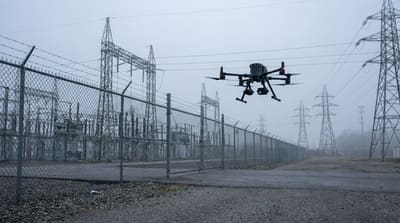
First, the rule touches far more than the drone industry. Critical-infrastructure owners across 16 sectors, from chemical plants to hospitals to defense industrial sites, see Section 2209 as their mechanism to keep drones away from their fence lines and the airspace above them. That is a very large constituency with a direct financial and security interest, and it is showing up in force.
Second, the sheer volume means the FAA now has to reconcile two populations whose interests point in opposite directions. Infrastructure owners want restrictions that are easy to obtain and broad in scope. Commercial operators want a rule that protects legitimate inspection, survey, mapping, and public-safety work from being fenced out of enormous chunks of low-altitude airspace. The extension is the agency buying time to build a record it can defend against both. For operators, that is precisely why your comment carries weight right now. The record is still being written, and the operator perspective is outnumbered by the site-owner perspective in raw comment count.
The Two Problems Experts Are Flagging
Two substantive critiques have surfaced from people who have read the proposal closely, and both are worth understanding because both create openings for a useful comment.
The first is the sensitive-information problem. As currently written, the proposed rule asks critical-infrastructure owners applying for an Unmanned Aircraft Flight Restriction, a UAFR, to provide detailed information about their facility's vulnerabilities, the consequences if those vulnerabilities are exploited, and how a flight restriction fits into their security plan. Jennifer Daskal, a former Department of Homeland Security acting general counsel now at Venable, has publicly warned that this creates what she calls a honeypot: a concentrated trove of the exact information an adversary would want, describing how to attack the nation's most important facilities. Her proposed alternative is a self-attestation model, where owners attest that they meet defined safety and security criteria without having to hand the FAA a detailed map of their weaknesses. That is a real design tension, and operators who support a leaner application process have an ally in that critique.
The second is the definitions problem. Some of the qualifying-facility definitions in the NPRM are drawn narrowly. Narrow definitions cut in a direction that sounds operator-friendly, fewer eligible sites means fewer restrictions, but the same narrowness can also produce inconsistent, litigated, case-by-case designations that are harder to plan around. Either way, the definitions are contested, and contested definitions in a proposed rule are exactly where a specific comment can move the final text.
Why the UAFR Structure Still Governs Your Planning
None of the underlying mechanics changed with the extension, and they remain the part operators most often misread. A UAFR is not automatic. The proposed 14 CFR Part 74 framework does not drop a restriction over every substation and refinery the moment the rule is final. The site owner has to apply, facility by facility, and demonstrate that the site is fixed, meets the critical-infrastructure definition, already has layered security including the ability to receive Remote ID broadcasts, and has a documented safety or security need.
That application-driven design is good news and a planning trap at the same time. Good news, because the sky does not suddenly fill with no-fly bubbles on the effective date. Trap, because once a UAFR is designated near your operating area, your continued ability to transit is conditioned on the carve-out, and the carve-out has requirements. The proposed transit conditions preserve Part 91, 107, 108, 135, and 137 passage through a UAFR, but they are conditional on Remote ID compliance, advance notification, and shortest-practicable-time transit. If you cannot demonstrate Remote ID and you have no notification-and-logging procedure, the carve-out does not protect you. This is the same compliance-as-procedure discipline we laid out in the BVLOS compliance checklist and the Part 108 explainer.
What To Do With the Extra 30 Days
The extension gives you a genuine chance to do this properly instead of firing off a generic objection on July 5. Concrete moves for the window between now and August 5:
-
File a specific, operational comment. The most useful comments are not policy essays. Name the routes or mission types a UAFR near a specific facility would affect. Quantify the rerouting cost, the added flight time, or the safety penalty of a longer route. State plainly whether the section 74.250 transit conditions are workable for how you actually operate. A concrete account of how a restriction over one named refinery would push a survey crew into a longer, less safe corridor is worth more than a hundred general objections, which the agency aggregates and discounts.
-
Weigh in on the sensitive-information design. If you support a self-attestation model over the detailed-vulnerability disclosure, say so, and say why a leaner application reduces both adversary risk and administrative friction. Operators are not the only constituency worried about that honeypot, and a broad comment record on it strengthens the case for a lighter process.
-
Audit your Remote ID posture now, not in August. The transit carve-out is conditioned on Remote ID. Confirm every aircraft in your fleet broadcasts standard Remote ID or carries a compliant module, and that you can demonstrate it in the field. Receive-side awareness matters too, since that is how you will know a restriction, or another operator, is active near you.
-
Pre-stage a facility-notification and transit-logging procedure. The carve-out requires advance notification and shortest-practicable-time transit. Bake a notification template and a transit-time log into your standard operating procedures before any UAFRs are designated. This is the same pre-staging that protects critical-infrastructure security programs, and it is far cheaper to build now than to improvise the day the first restriction near your routes goes live.
The UAVHQ Read
The extension does not lower the stakes of Section 2209. It raises them. A rule that draws a million comments and a month of extra deliberation is a rule the FAA knows is consequential, contested, and durable. This will create permanent restricted airspace around a huge category of fixed sites, and the only thing keeping commercial operators flying near those sites is a conditional transit carve-out you have to actively comply with and document.
You have until August 5. Use it. File a comment that describes your actual operation, not a generic complaint. Get your Remote ID and transit-documentation posture in order. Write the notification-and-logging procedure into your SOPs. The operators who engage during this window will be the ones who helped shape the airspace they have to fly in, instead of inheriting whatever the site owners argued for while the drone side stayed quiet.
Sources
- GovInfo, Federal Register (June 30, 2026): Extension of Comment Period, doc 2026-13126
- Federal Register: Designation, Restrict the Operation of Unmanned Aircraft in Close Proximity to a Fixed Site Facility
- Regulations.gov: Docket FAA-2026-4558
- DRONELIFE: Nearly One Million Comments Underscore Stakes of FAA's Section 2209 Rule
- DroneDeploy: The FAA's Section 2209 NPRM, a Long-Awaited Step Toward Clearer Airspace Rules
Section 2209 UAFR Critical Infrastructure 14 CFR Part 74 NPRM FAA-2026-4558 Comment Period Extension August 5 Remote ID Part 108 Part 107 Part 137 Commercial Drone Compliance Transit Carve-Out
Consulting Intake Paused
UAVHQ is not currently accepting new consulting clients. Existing commitments remain supported; select time-sensitive safety or regulatory inquiries may be reviewed as availability allows.