
By Wesley Alexander • June 12, 2026 • 8 min read
Tactical Summary
On June 1, 2026, Motorola Solutions announced a definitive agreement to acquire D-Fend Solutions, the Israeli counter-drone company behind the EnforceAir RF cyber-takeover platform, for $1.5 billion. The deal is expected to close in the fourth quarter of 2026, pending regulatory approval. D-Fend's systems are deployed in more than 30 countries, revenue has grown over 50% annually for three years running, and the company expects roughly $185 million in 2026 revenue.
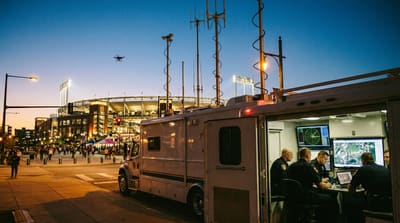
The price tag is the headline. The timing is the story. This acquisition lands weeks after the Safer Skies Act, enacted in the FY2026 National Defense Authorization Act, gave state, local, tribal, and territorial law enforcement legal authority to detect, track, and (where permitted, with training and certification requirements) mitigate drone threats for the first time. It lands while FEMA is distributing a $500 million Counter-UAS Grant Program, with the first $250 million prioritized for the eleven states hosting 2026 FIFA World Cup matches. And it lands with the World Cup itself now underway across U.S. host cities.
Motorola Solutions is not buying a niche security vendor. It is buying the airspace layer of the public safety technology stack it already sells to thousands of American police departments. Every commercial operator, DFR program, and drone service provider should read this deal as confirmation: counter-UAS is becoming permanent infrastructure in the airspace you fly in, run by the agencies you coordinate with, integrated into the same dispatch and command ecosystems that run everything else.
Why D-Fend, Specifically
D-Fend's EnforceAir platform does something most counter-drone systems cannot: it takes control of an unauthorized drone's command link and lands the aircraft at a designated safe point, while authorized drones in the same airspace keep flying. No jamming that blankets the spectrum, no kinetic intercept, no area-wide airspace shutdown.
That last part is the operationally important one. We saw what the blunt-instrument alternative looks like during the El Paso counter-drone response, where the answer to a drone threat was effectively shutting down airspace and grounding everyone, including legitimate operators. A surgical takeover capability changes that calculus. A police department running a drone-as-first-responder program needs to neutralize a rogue quadcopter over a stadium without simultaneously knocking its own DFR aircraft out of the sky. RF cyber-takeover is one of the few mitigation approaches that can plausibly deliver that selectivity.
For Motorola Solutions, which already sells the radios, the dispatch software, the body cameras, and the real-time crime center platforms, D-Fend fills in the low-altitude airspace picture. This follows its acquisition of Silvus Technologies, a drone communications and networking company, in a deal reported at $4.4 billion. Taken together, the company is positioning on both sides of the drone equation: connectivity for authorized aircraft, takeover for unauthorized ones.
The Regulatory Floor Just Moved Under This Market
None of this works as a $1.5 billion bet without the legal authority to use it, and that is what changed in December 2025. The Safer Skies Act expanded counter-UAS mitigation authority beyond the handful of federal agencies that previously held it, opening the door for trained and certified state and local law enforcement and correctional agencies. There are roughly 18,000 law enforcement agencies in the United States. Even modest adoption rates create a procurement market that did not legally exist eighteen months ago.
The money is following the authority. FEMA's Counter-UAS Grant Program allocates $500 million across FY2026 and FY2027: the first $250 million tier prioritized for World Cup host states and America 250 event jurisdictions, the second $250 million opening to all states and territories. That sits alongside a separate $625 million FIFA World Cup Grant Program for host city security. We covered the procurement side of this when DHS published its counter-drone purchasing tool for World Cup cities, and the federal architecture question when FAA and the Department of War reframed counter-UAS as airspace management under Project ULTRA.
Authority, funding, and now consolidated vendors with established public safety sales channels. That is what a market maturing looks like, and it is happening on a compressed timeline because the World Cup forced the schedule.
What This Means If You Fly for a Living
The instinct among commercial operators is to treat counter-UAS as someone else's problem. That stops being viable when mitigation systems become standard equipment for thousands of local agencies. Practical implications worth planning for now:
-
Your compliance posture is your protection. Systems like EnforceAir distinguish authorized from unauthorized aircraft, and the inputs to that determination are the things you already control: Remote ID broadcast, current registration, airspace authorizations on file, and coordination with the agencies operating in your area. An aircraft that is squawking clean and matches an expected operation profile looks categorically different to a counter-UAS operator than one that is dark. If your Remote ID compliance is sloppy, fix it before this equipment proliferates, not after your aircraft gets force-landed.
-
Pre-coordinate with public safety in your operating areas. As local agencies stand up counter-UAS capability under their new authority, they are building target folders of what normal looks like in their airspace. Be in that folder. If you run recurring commercial operations near venues, critical infrastructure, or event sites, introduce your program to the agency before their new equipment arrives. The conversation is much easier as a known operator than as an unidentified return on a sensor screen.
-
Expect temporary restrictions to come with teeth. Drone restrictions around major events have historically been enforced inconsistently. The combination of detection coverage, mitigation authority, and the current FAA enforcement posture changes that. A TFR bust near a World Cup venue this summer can now end with your aircraft commandeered out of the sky and a certificate action behind it.
-
Watch the C2 link security implications. D-Fend's core technique is exploiting drone command links. As this capability spreads, the security of your own C2 link becomes an operational reliability question, not an abstract one. Operators flying systems with hardened, encrypted, or non-standard links should understand how those interact with local mitigation systems, and operators flying commodity hardware should understand that their links are precisely what these tools are built to manipulate. This is worth raising with your airframe vendor directly.
The Consolidation Signal for the Industry
There is a second-order read here for everyone building or buying in this space. The counter-UAS sector has spent a decade as a fragmented field of startups selling point solutions to early federal adopters. A $1.5 billion exit to the dominant public safety integrator, at roughly eight times forward revenue, tells the rest of the market where this ends: counter-UAS gets absorbed into integrated public safety platforms, sold through established channels, and bundled with the dispatch, video, and records systems agencies already run.
For agencies, that is mostly good news, fewer integration seams and one throat to choke. For independent counter-UAS vendors, the bar just moved; differentiated technology and a credible path into agency procurement now matter more than demo-day sizzle. For drone operators, it means the airspace awareness picture local agencies see will increasingly be the same picture across jurisdictions, which makes consistent, verifiable compliance worth more than it was last year.
The low-altitude airspace is getting instrumented, funded, and legally supervised at the local level for the first time. The operators who thrive in that environment will be the ones who treated it as inevitable and prepared, documented their operations, hardened their compliance, and built relationships with the agencies now holding both the sensors and the authority.
If your organization needs help mapping counter-UAS exposure for your operating areas, building the coordination relationships with local public safety, or getting your Remote ID and authorization documentation defensible before this equipment reaches your airspace, that is exactly the kind of work UAVHQ does.
Sources
- sUAS News: Motorola Solutions to Acquire D-Fend Solutions, an Industry Leader in Counter-Drone Systems
- DroneLife: Motorola Solutions Makes $1.5 Billion Bet on Counter-Drone Technology
- Inside Unmanned Systems: Motorola Solutions to Acquire D-Fend Solutions for $1.5 Billion
- UASweekly: Motorola Solutions Acquires D-Fend in $1.5 Billion Deal
- New Jersey OHSP: Counter-Unmanned Aircraft Systems Grant Program (C-UASGP)
- Congress.gov: S.3481, SAFER SKIES Act
Motorola Solutions D-Fend acquisition counter-UAS counter-drone Safer Skies Act FEMA C-UAS grant World Cup public safety EnforceAir RF cyber takeover Remote ID drone operators