
UAVHQ Staff March 8, 2026
Watch: Pentagon and FAA Launch Joint Anti-Drone Laser Tests After Coordination Failures More videos →
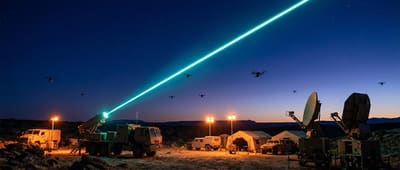
In a landmark move to repair fractured interagency coordination, the Pentagon and Federal Aviation Administration conducted joint testing of anti-drone laser systems at White Sands Missile Range this weekend, following a series of communication breakdowns that forced sudden airspace closures and sparked congressional investigations.
The March 7-8 tests, conducted by Joint Interagency Task Force 401, represent the first formal collaboration between the military and FAA on counter-drone laser deployment protocols—a partnership that industry experts say should have been established years ago as directed energy weapons became operational reality.
The Coordination Crisis That Sparked Reform
The joint tests were prompted by two high-profile incidents in February that exposed dangerous gaps in military-FAA coordination. The first occurred in early February when the Pentagon allowed U.S. Customs and Border Protection to deploy an anti-drone laser near Fort Bliss without notifying the FAA—even as a coordination meeting between the agencies was already scheduled for later that month.
The FAA's response was swift and disruptive: officials abruptly closed El Paso's airspace up to 18,000 feet for what was initially announced as 10 days but was later reduced to eight hours. The closure forced cancellation of 14 commercial flights and required rerouting of medical evacuation aircraft, creating operational chaos and highlighting the immediate safety implications of uncoordinated counter-drone operations.
The situation grew more concerning on February 26, when U.S. forces used laser systems to shoot down what military personnel described as a "seemingly threatening" drone near the U.S.-Mexico border—only to discover it belonged to CBP itself. The incident prompted a second airspace closure around Fort Hancock, roughly 50 miles southeast of El Paso, and intensified calls for congressional oversight.
"The lack of coordination that's endemic in this Trump administration," said Sen. Tammy Duckworth (D-IL), ranking member of the Senate Aviation Subcommittee, reflecting growing bipartisan frustration with interagency communication breakdowns.
Testing Framework for Future Operations
This weekend's White Sands tests were specifically designed to address FAA safety concerns while establishing protocols for future laser deployments. According to the military statement, the testing focused on three critical areas:
- Aircraft Safety Assessment: Gathering data on laser effects on aircraft surrogates to understand potential damage to commercial aviation equipment
- Automated Safety Systems: Validating functionality of automated shut-off systems designed to prevent laser interference with legitimate aircraft
- Aircrew Protection: Analyzing eye safety protocols to protect pilots from laser exposure during counter-drone operations
The tests represent what Joint Interagency Task Force 401 described as "part of a long-term, multi-year partnership between the Department of War and the FAA to ensure counter-drone technologies are safely integrated into the national airspace."
Industry Implications: A $60 Million Market at a Crossroads
The coordination crisis comes at a critical juncture for the counter-UAS industry, which research firm IQPC projects will reach $60 million during the 2024-2029 forecast period. Major defense contractors including Boeing, Lockheed Martin, and Raytheon have invested heavily in directed energy counter-drone solutions, but the February incidents highlight how regulatory uncertainty can disrupt deployment timelines.
The market momentum is being driven by escalating drone threats along the southern border, where officials detected more than 27,000 unauthorized UAV incursions within 500 meters of the border during the final six months of 2024 alone. These numbers have intensified pressure on border agencies to deploy effective counter-measures, but the February coordination failures demonstrate that technical capability alone is insufficient without proper integration protocols.
Boeing, which has established itself as a prominent defense contractor delivering laser-based counter-UAS systems to the Department of Defense, exemplifies the industry's focus on directed energy solutions. However, the company and its competitors now face the reality that future contracts will likely include stringent FAA coordination requirements that could affect deployment timelines and operational flexibility.
What This Means for Commercial Drone Operators
For commercial drone operators—as we explored in our analysis of lessons from the El Paso counter-drone crisis—the White Sands tests signal both challenges and opportunities. The establishment of formal military-FAA coordination protocols could lead to more predictable airspace management, reducing the risk of sudden closures that have previously disrupted commercial operations.
However, the incidents also underscore the growing sophistication of counter-drone capabilities that commercial operators may encounter. As directed energy weapons become more common near borders, airports, and military installations, drone pilots will need enhanced awareness of restricted areas and improved coordination with air traffic control systems.
The testing framework developed at White Sands could also inform future regulations governing counter-drone operations in mixed-use airspace, potentially creating new compliance requirements for commercial operators flying near sensitive facilities. Our consulting services help operators stay ahead of these evolving regulatory demands.
Regulatory Reform on the Horizon
The coordination breakdown that prompted this weekend's tests has broader implications for drone regulation reform. Current law requires the military to formally notify the FAA before any counter-drone action inside U.S. airspace—a requirement that was ignored in both February incidents.
Sen. Ben Ray Lujan (D-NM) has demanded answers from both the FAA and the Trump administration about "why the airspace was closed in the first place without notifying appropriate officials, leaving travelers to deal with unnecessary chaos." The congressional pressure suggests potential legislative action to strengthen interagency coordination requirements.
The incidents also echo findings from last year's deadly midair collision near Reagan National Airport, where the National Transportation Safety Board determined that the FAA and Army had failed to share critical safety data. The pattern of communication failures suggests systemic issues that extend beyond counter-drone operations to broader airspace management challenges.
Looking Forward: Integration vs. Isolation
The White Sands tests represent a crucial first step toward what the FAA and Department of War described as addressing "emerging threats posed by unmanned aircraft systems while maintaining the safety of the National Airspace System." However, industry experts warn that successful integration will require sustained commitment from both agencies.
The counter-drone market's growth trajectory depends heavily on regulatory clarity and operational predictability. Companies developing directed energy solutions—including those testing at facilities like Michigan's new National Drone War Lab—need assurance that their systems can be deployed without triggering airspace closures or congressional investigations. Meanwhile, commercial aviation stakeholders require confidence that counter-drone operations won't disrupt legitimate air traffic.
As the drone threat landscape continues to evolve—from cartel operations at the border to potential security concerns at major events and infrastructure—the need for coordinated response capabilities will only intensify. The lessons learned at White Sands this weekend could determine whether future counter-drone deployments enhance security or create new risks for the national airspace system.
For the drone industry, the stakes couldn't be higher: get integration right, and directed energy counter-UAS becomes a reliable tool for threat mitigation. Get it wrong, and the regulatory backlash could set back commercial drone operations for years to come.
📺 Watch the Video Briefing
Get expert video analysis on this topic and more on the UAVHQ YouTube channel.
🚁 Stay Ahead of the Drone Industry
Expert analysis on FAA regulations, commercial operations, and emerging technology — delivered to your inbox.
Subscribe
Consulting Intake Paused
UAVHQ is not currently accepting new consulting clients. Existing commitments remain supported; select time-sensitive safety or regulatory inquiries may be reviewed as availability allows.
Sponsored by
Your Brand Here
Reach drone professionals, commercial operators, and aviation decision-makers.
Sources:
- Newsweek: Pentagon, FAA to Test Anti-Drone Lasers After Airspace Closures
- WYFF4: US Military and FAA plan joint test of lasers designed to shoot down drones
- DefenseScoop: Pentagon, FAA to test counter-drone laser weapon in New Mexico
- IQPC Counter-UAS Market Report 2024-2029
📺 Watch the Video Briefing
Get expert video analysis on this topic and more on the UAVHQ YouTube channel.
🚁 Stay Ahead of the Drone Industry
Expert analysis on FAA regulations, commercial operations, and emerging technology — delivered to your inbox.
Subscribe
Sponsored by
Your Brand Here
Reach drone professionals, commercial operators, and aviation decision-makers.
UAVHQ
Drone industry intelligence and professional UAV consulting from Wesley Alexander — Senior Test Pilot with 25+ years of aviation leadership.
Explore
Connect
© 2026 UAVHQ. All rights reserved. · Privacy Policy