
By Wesley Alexander • September 9, 2026 • 8 min read
Tactical Summary
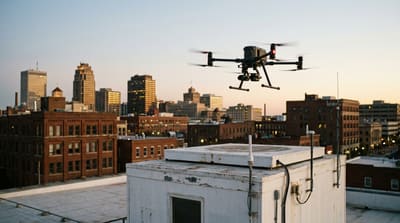
Springfield, Missouri police can now launch drones to selected 911 calls from two rooftop docks operating around the clock, one at police headquarters and one at Fire Station 9.[1] About 40 to 50 trained pilots can send an aircraft to an address remotely; the drone flies itself to the entered location and relays video to responding officers.[1] Each dock cost about $375,000.[1]
That last number will anchor most coverage, and it is the least interesting figure in the story. Two docks is roughly three-quarters of a million dollars of visible hardware. The part that determines whether this program works is everything around it: a pilot bench several dozen deep, a written set of rules about where the camera points and how long video lives, and a staffed real-time information center that does not exist yet. Springfield, deliberately or not, is demonstrating the correct order of operations for a drone-as-first-responder program, and the lesson generalizes to every agency currently pricing a dock.
What Springfield Actually Built
The timeline matters. Springfield PD stood up its Unmanned Aerial Vehicle Unit in April 2024 and reported 906 total drone deployments in 2025, with 22 suspect-apprehension assists and 10 missing children located.[2] Maj. Eric Reece told KY3 that most of those 2025 deployments were mobile launches, flown before the rooftop dock system came fully online.[1] The department installed its first Skydio dock on a city rooftop in 2025 and planned the second for 2026.[2]
In other words: two years of manual operations, a caseload that proved demand, and a trained cadre before the automation went 24/7. The docks are the newest part of the program, not the foundation of it.
The dispatch profile is deliberately narrow. Drones respond to high-priority calls: burglaries, assaults, potential barricades, and searches for missing people.[1] On some reported crashes, the aircraft can confirm the road is clear and nobody appears hurt before a patrol unit ever rolls, which frees that officer for the next call.[1] Reece cites the national picture: DFR drones average about four minutes to reach a call, against six to six-and-a-half minutes for Springfield officers on high-priority responses.[1] Two-plus minutes of earlier eyes on scene is the entire value proposition, and it only pays off on the calls where information changes the response.
The Staffing Number Is the Program
Forty to fifty trained pilots for a two-dock system deserves a pause. That is not a rounding error or bureaucratic padding; it is what 24/7 remote-launch capability actually costs in people. Continuous coverage means pilots available across every shift, every day, with enough depth to absorb leave, attrition, court dates, and training cycles. An agency that buys a dock and trains four pilots has purchased a business-hours demonstration project, not a DFR capability.
Springfield's own planning documents are explicit that people were the constraint they were working. The department's published goals include seeking increased drone-unit staffing to provide 24/7 monitoring coverage, and identifying funding to expand docks and aircraft citywide.[3] Hardware expansion and staffing expansion move as a pair in those objectives, not as hardware first and people eventually.
This is where the Fort Worth citywide Flock DFR launch and Springfield's rollout rhyme: in both cases the press-conference artifact is a dock or a fleet, and the operational artifact is a duty roster. It is also why FAA approvals that let one pilot manage multiple aircraft matter so much to this sector's economics. Pilot-to-aircraft ratio is the lever that decides whether a city can afford continuous coverage, because the pilots, not the drones, are the recurring cost.
The Policy Scaffolding That Keeps It Defensible
The second thing Springfield got right is that the privacy rules were articulated at launch, in public, by name. Per Reece: flights are recorded end to end, video is normally deleted after 30 days unless preserved as evidence, and during the automated transit to a call the camera faces the horizon rather than the yards below.[1] The department says the drones do not use facial recognition and do not read license plates, and that trained officers interpret the footage, including thermal imagery.[1]
Reece also drew the legal line publicly: the department can fly anywhere a helicopter could, but will not hover over or search a residence without probable cause, an emergency call for service, or a warrant.[1]
Program managers should treat that list as a template, because every item on it answers a question a city council or a civil-liberties group will eventually ask. Retention period. Transit camera behavior. Analytics that are explicitly off the table. The predicate required before a drone lingers over private property. Agencies that launch without written answers to those four questions are borrowing against a trust budget they have not funded, and the license-plate-reader teardowns of the past two years show what happens when that debt comes due. Programs like Warren, Michigan's unified police-fire operation and Vanderbilt's campus DFR have similarly found that the governance documents do as much work as the aircraft.
The Missing Piece Springfield Named Out Loud
The most useful admission in the KY3 story is about what does not exist yet: within the next year, SPD plans to create a staffed real-time crime information center to monitor the drone feeds and support responding officers.[1] The department's planning documents describe the same build: a Real Time Information Center on the department's existing FUSUS infrastructure, initially staffed by the Crime Analysis Unit and drone officers.[2][3]
A drone feed nobody is watching is telemetry, not intelligence. Until there are dedicated humans whose job is to watch, interpret, and relay, the video's value depends on responding officers glancing at a screen while driving. The RTIC is where a DFR program converts from a camera delivery system into a decision-support system. Agencies sequencing their own programs should note that Springfield is treating the information center as a distinct, funded, staffed phase, not as something the dock vendor throws in.
What Program Managers Should Take From This
For an agency evaluating a dock purchase, Springfield's rollout suggests a checklist that runs in almost the opposite order from the sales process:
- Prove demand manually first. Two years of mobile launches and 906 deployments built the case, the skills, and the institutional muscle before automation.[1][2]
- Budget the bench, not the box. Price 24/7 coverage in trained pilots across shifts before pricing hardware. If the staffing line is not several multiples of the dock line over five years, the plan is optimistic.
- Write the policy scaffolding before launch. Retention, transit camera behavior, prohibited analytics, and the predicate for targeted surveillance, all in public, all attributable to a named official.
- Do the airspace homework as its own workstream. Remote dock launches raise their own authorization, coordination, and beyond-visual-line-of-sight questions that vary by airspace and by program design; the sources here do not detail Springfield's specific FAA authorizations, and no agency should assume another city's approvals transfer. What is certain is that the regulatory package is program infrastructure, on the critical path, not paperwork to backfill.
- Fund the watch floor. A staffed information center is the phase where response times actually change. Plan it as a deliverable with headcount, not an aspiration.
The uncomfortable summary for any chief holding a vendor quote: the dock is the part you can buy. The program is the part you have to build, and Springfield's version of it is 40 to 50 people deep with a staffed watch floor still to come.
If your agency is working through the authorization side of dock-launched or beyond-visual-line-of-sight operations, our Part 108 BVLOS Readiness Playbook walks through the documentation, safety case, and readiness review that regulators and city attorneys will both ask for. And for ongoing coverage of how DFR programs, staffing models, and the rules around them evolve, the weekly UAVHQ dispatch on Substack tracks this beat.