
By Wesley Alexander • June 23, 2026 • 8 min read
Tactical Summary
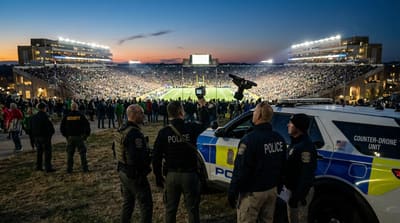
The 2026 FIFA World Cup is now the largest live counter-drone enforcement operation ever run on U.S. soil, and the early numbers are not warnings. They are seizures, citations, and federal charges. Since the tournament opened on June 11, federal officials have reported more than 100 drone incidents and over 145 incursions into restricted airspace around stadiums and fan events. In a single Kansas City operation reported by the Transportation Security Administration, eight drones and their controllers were seized in one day. Across the first week in that city alone, the joint counter-UAS operation logged 19 detections, 18 law-enforcement contacts, 14 seizures, and 5 federal criminal citations.
This is the shift I want every Part 107 operator to internalize. For years, flying into a sporting-event Temporary Flight Restriction carried a theoretical penalty most pilots never expected to see enforced. That gap is closed. The federal counter-UAS posture built for the World Cup is detecting, geolocating, and physically intercepting operators in near real time, and the people getting caught are not all bad actors. Some are working pilots and hobbyists who simply did not check.
If you fly commercially anywhere near a host city, a team hotel, or a fan festival this summer, your exposure changed. Here is what the data says and what to do about it.
What the Enforcement Numbers Actually Show
The raw figures matter because they reveal capability, not just intent. The Kansas City press release describes a Federal Air Marshal Service, FBI, and city police counter-UAS joint operation that detected 19 drones in TFR zones over roughly a week and converted those detections into 18 physical contacts. That is a near-total contact rate. The system is not catching one in ten violators. It is catching nearly all of them.
Los Angeles tells the same story at scale. More than two dozen drones were seized around Los Angeles Stadium in Inglewood and other event sites, according to figures attributed to the FBI and TSA. Miami reported at least 28 seizures. FBI Miami's own published tallies climbed through the week, with ticketing and seizure counts rising at almost every match day. Seattle logged 11 seizures in a single day on June 19. Nationally, AVweb compiled federal reporting of over 100 incidents and 145 airspace incursions with multiple operators now facing federal charges.
Two things stand out to an operator. First, the detection coverage is dense and persistent, not a spot check at the gate. Second, the response is layered: detection, then law-enforcement contact, then seizure of the aircraft and controller, then a citation or charge depending on the conduct. There is no single point where a careful pilot gets a courtesy pass.
The Penalty Structure Is Not Theoretical Anymore
The financial exposure is specific and federal. Per the FAA framework cited in the enforcement releases, a TFR violation can carry civil fines up to $75,000, criminal fines up to $100,000, up to a year in prison, and seizure of the aircraft. The Kansas City U.S. Attorney's office framed it plainly: violators will be held accountable by the Department of Justice.
Read that as an operator, not a headline. Seizure of the drone and controller is now a routine first-order consequence, applied even where no criminal charge follows. For a commercial operator flying a $20,000 mapping or inspection platform, losing the airframe and the ground station to evidence custody is a direct operational and financial hit independent of any fine. The asset does not come back the next morning.
This is the same enforcement architecture I walked through when the venue list first dropped. In our breakdown of why LAANC will not save you inside a World Cup TFR, the core legal point was that a TFR is a separate instrument sitting on top of the underlying airspace. A standing Part 107 certificate, a valid LAANC authorization, and recreational privileges under Section 44809 all grant exactly zero access inside an active restricted ring. The enforcement numbers are simply that legal reality being executed at tournament scale.
The Trap Is the Geometry, Not the Stadium
Most operators picture the risk as the stadium itself. The actual trap is the geometry around it, and the part that catches working pilots is the rings they never think to check.
The World Cup TFR structure has three layers. Match stadiums carry a 3-nautical-mile radius from the surface to 3,000 feet AGL. Fan-event venues carry a 1 NM radius to 1,000 feet AGL. The third layer is the one that bites: team hotels, base camps, and training facilities also carry 1 NM restrictions, and they appear in cities with no matches at all. We documented exactly this failure mode in the Chattanooga waiver case, where a city hosting zero matches ended up blanketed by overlapping base-camp rings because a national team trained there.
If you are doing a roofing inspection, a real-estate shoot, or an infrastructure survey in a metro hosting matches or housing a team, the restriction may sit directly over a job site that has nothing to do with the tournament. The FAA's published venue tables are a planning artifact. The controlling document is the active NOTAM at tfr.faa.gov, and the base-camp rings live there, not in the headline list.
What to Change Before Your Next Flight
This is the operator checklist. None of it is exotic. All of it is the difference between a normal job and a seized aircraft.
-
Pull the TFR for every flight in or near a host metro, every time. Check tfr.faa.gov and B4UFLY before each operation, not once at the start of the week. TFR boundaries and effective times shift with the match and event schedule. A site that was clear yesterday can sit inside an active ring today.
-
Map the base-camp rings, not just the stadiums. Identify which teams are housed in your operating area and find their hotel and training-facility restrictions specifically. These are the rings most likely to overlap routine commercial work in a city with no matches.
-
Treat LAANC silence as a stop signal, not a green light. If LAANC will not return an authorization for a site you expected to clear, that is often the TFR talking. Do not interpret a failed or absent authorization as a system glitch you can fly through. The grid does not adjudicate TFR access at all.
-
Broadcast clean Remote ID and carry your paperwork. Inside a dense counter-UAS environment, a clean Remote ID broadcast, current registration, and authorizations on file are what separate an authorized aircraft from a threat the security cell has to interdict. If you have a legitimate reason to be operating near a protected area under a waiver, being known and broadcasting cleanly is your protection.
-
If the only legal path is a waiver, treat it as a real project. There is no last-minute portal into a security TFR. Advance, multi-agency waiver work is the only door, and it takes weeks. If a contract puts you inside a ring, secure the waiver through the full FAA and security-stakeholder process, or do not fly.
Why This Pattern Outlasts the World Cup
The tournament ends, but the model does not. Dense federal counter-UAS coverage, near-total detection-to-contact rates, immediate aircraft seizure, and waiver-only access into protected rings is now a proven template. It will reappear at the 2028 Los Angeles Olympics, at major NFL and championship events, and at any future National Special Security Event. The FAA and its security partners just ran a nationwide rehearsal and published the results.
For legitimate operators, this is not bad news. A mature, predictable enforcement environment rewards the pilots who do the unglamorous work: pull the NOTAM, map the rings, broadcast clean, and secure the waiver when one is required. The operators building that discipline now will carry it into every protected-event operation that follows. The ones treating airspace checks as optional are the ones whose aircraft are sitting in an FBI evidence locker this week.
If your organization needs to operate near a protected event and the airspace path is unclear, that pre-coordination and safety-case work is exactly the kind of regulatory engagement UAVHQ consulting handles for operators.
Sources
- TSA: Eight Drones Seized and Two Violation Notices Issued During June 16 FIFA World Cup Events (June 18, 2026)
- AVweb: World Cup Drone Violations Draw Federal Response
- NBC Los Angeles: More than two dozen drones seized for violations at LA World Cup events
- FAA: FAA Establishes 'No Drone Zones' for FIFA World Cup 2026 Stadiums, Fan Events and Base Camps
- FAA: Safety Plan for FIFA World Cup 2026 (No Drone Zone)
- FAA TFR System (tfr.faa.gov)
World Cup drone enforcement TFR seizures Part 107 counter-UAS FBI TSA FAA no drone zone Remote ID base camp federal charges 2026