
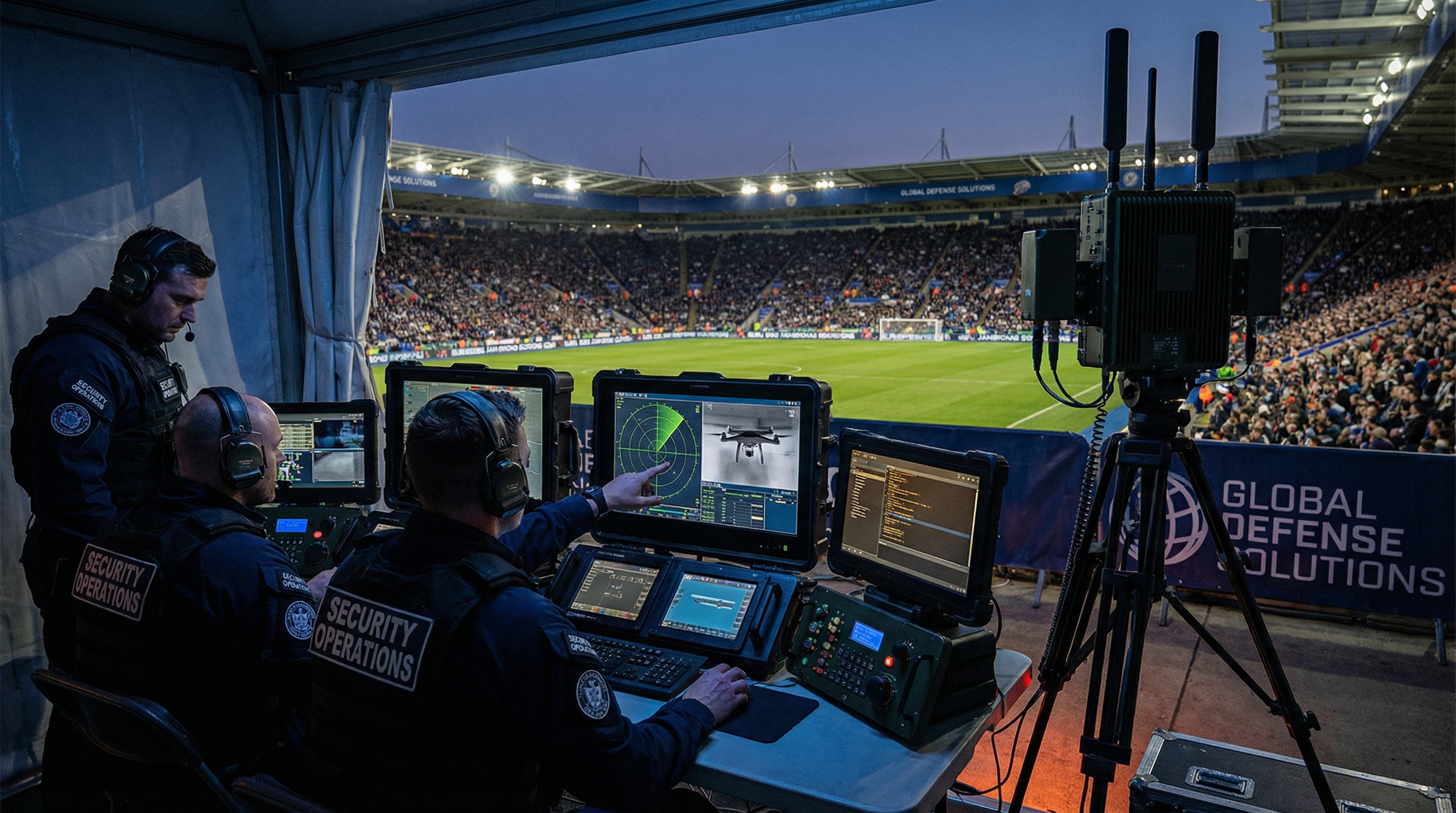
In a coordinated global response to escalating drone security threats, the European Commission yesterday unveiled its comprehensive Action Plan on Drone and Counter-Drone Security, while the U.S. Department of Homeland Security announced a multimillion-dollar procurement of drone-catching nets for the upcoming 2026 FIFA World Cup. These developments signal a dramatic shift in how governments are approaching unmanned aircraft threats at both policy and operational levels.
Europe's United Front Against Drone Threats
The European Commission's new Action Plan, published February 11, 2026, represents the most ambitious coordinated drone security initiative in European Union history. The plan calls for a "united approach against threats posed by malicious drones" and establishes four key priorities that will reshape how the EU's 27 member states address unmanned aircraft security challenges.
The plan's four pillars focus on enhancing preparedness, boosting detection capacities, coordinating responses, and strengthening the EU's overall defense readiness. What makes this initiative particularly significant is its emphasis on "co-ownership" among member states, requiring appointment of National Drone Security Coordinators in each country to oversee implementation. This coordinated approach addresses challenges recently highlighted by incidents like the El Paso counter-drone crisis.
"The threat posed by small drones is one of the most consequential shifts in security of our lifetime," said Jon Gruen, CEO of Fortem Technologies, whose company was recently awarded a major DHS contract for World Cup security.
The European approach goes beyond traditional security measures by fostering closer ties between governments and industry through the Drone Alliance with Ukraine. This initiative will accelerate development of affordable defense technology and fast-track mass production capabilities, forming the foundation for the planned European Drone Defence Initiative and Eastern Flank Watch program.
EU funding mechanisms are already backing this ambitious vision. Horizon Europe and the European Defence Fund are supporting technological development, while the upcoming European Defence Industry Programme and SAFE loans will provide additional financial resources for member states implementing counter-drone capabilities.
World Cup Security: A $250 Million Investment
Across the Atlantic, the United States is taking an equally serious approach to drone security as it prepares to host the 2026 FIFA World Cup. With more than one million international visitors expected at venues across eleven U.S. cities, federal security planners are mobilizing unprecedented counter-UAS resources.
Utah-based Fortem Technologies, which previously provided counter-drone support for the 2022 World Cup in Qatar, has secured a multimillion-dollar DHS order for its advanced DroneHunter interceptor systems. These sophisticated counter-UAS platforms deploy nets to neutralize rogue drones without creating collateral damage—a critical consideration when thousands of spectators are packed into stadiums.
The Fortem solution addresses key limitations of alternative counter-drone approaches. Traditional jamming systems can interfere with stadium communications or prove ineffective against autonomous drones, as demonstrated during the Pentagon-FAA joint anti-drone laser tests. Kinetic "kill systems" that use projectiles risk scattering debris into crowds. The net-based approach eliminates threats while maintaining public safety.
The comprehensive DHS package includes TrueView R30 ground-based radar systems for detection and tracking, plus SkyDome Manager command-and-control software. This integrated approach allows rapid deployment between World Cup venues in the eleven host cities, providing flexible security coverage throughout the tournament.
Federal Investment Surge in Counter-Drone Technology
The World Cup preparations are part of a broader federal investment surge in counter-UAS capabilities. The Federal Emergency Management Agency awarded $250 million in January to the eleven World Cup host states and Washington, D.C., drawn from FEMA's larger $500 million C-UAS Grant Program.
This financial commitment reflects growing recognition of drone threats across government agencies. DHS has established a new Program Executive Office for UAS and C-UAS, which allocated an additional $115 million in counter-drone technology for participating states. The agency is also pursuing a "$1.5 billion contract vehicle" to help Customs and Border Protection and Immigration and Customs Enforcement acquire advanced protective technologies.
Federal C-UAS authorities have expanded significantly since the Preventing Emerging Threats Act of 2018 granted DHS authority to detect, track, and mitigate drones posing credible threats. The agency reports conducting over 1,500 missions to protect against illicit drone activities, with personnel regularly stationed at major sporting events including the Super Bowl.
The recently passed Safer Skies Act, included in the 2026 National Defense Authorization Act, extends certain federal C-UAS permissions to state, local, tribal, and territorial governments, significantly broadening the counter-drone authority across jurisdictional levels.
The FAA's Enforcement Evolution
Complementing these security measures, the Federal Aviation Administration has adopted a stricter enforcement stance toward drone violations. February 2026 guidance implements harsher penalties, with the agency now levying fines and revoking certifications for violators who previously faced only lower-level compliance actions.
This enforcement evolution—covered in detail in our report on the FAA's 2026 enforcement crackdown—reflects the aviation regulator's recognition that traditional compliance-focused approaches may be insufficient for addressing the growing scale and sophistication of drone threats. The shift toward punitive measures signals a fundamental change in how federal authorities balance drone innovation with security imperatives.
Industry Implications: The Security-Innovation Balance
For commercial drone operators, these developments present both opportunities and challenges. The massive government investment in counter-UAS technology creates substantial market opportunities for companies developing detection, tracking, and interdiction systems. However, the increasingly security-focused regulatory environment may also complicate operations for legitimate commercial users.
The European Action Plan's emphasis on industry cooperation suggests a more collaborative approach than purely regulatory solutions. The Drone Alliance with Ukraine and focus on innovation partnerships indicate that European authorities recognize the need to harness private sector capabilities rather than simply restricting drone activities.
Commercial operators should expect increased scrutiny around major events and critical infrastructure. Our drone consulting services can help operators prepare for these heightened security environments. The comprehensive security preparations for the World Cup demonstrate that temporary flight restrictions and enhanced enforcement will become standard practice for high-profile gatherings.
Professional Operator Perspective
For certified drone pilots and commercial operators, these security developments necessitate several operational adjustments:
- Enhanced flight planning: Expect more complex and frequently updated temporary flight restrictions around major events and critical infrastructure.
- Documentation requirements: Maintain comprehensive flight logs and operational documentation to demonstrate compliance during any security investigations.
- Technology integration: Consider how Remote ID and other tracking technologies will interact with expanding counter-UAS systems.
- International coordination: For operators working across borders, understand how different national approaches to drone security may affect cross-border operations.
Looking Ahead: A New Security Paradigm
The simultaneous launch of Europe's Action Plan and America's World Cup security preparations represents more than isolated policy initiatives. These developments signal the emergence of a new international paradigm for drone security that balances innovation promotion with threat mitigation.
The success of these programs will likely influence how other nations approach drone security challenges. Countries hosting major international events will closely watch the World Cup security implementation, while the EU's coordinated approach may serve as a model for other regional organizations.
For the drone industry, these developments underscore the critical importance of proactive security considerations in product development and operational planning. Companies that can effectively integrate security features while maintaining operational flexibility will likely find competitive advantages in this evolving landscape.
As drone technology continues advancing and threats become more sophisticated, the coordination between government security agencies and private industry will prove essential. The European Action Plan's emphasis on partnership and the substantial U.S. investment in proven counter-UAS technologies suggest that effective drone security requires both policy coordination and technological innovation working in tandem.